Content & Marketing
How to Build Topical Authority: A Practical 7-Step System
By Bibek Thapa · Updated · 13 min read
Quick Answer
To build topical authority, choose a subject that fits your audience and business, map the distinct problems people need to solve, and assign each problem to one useful page. Connect a broad pillar page to focused cluster articles with contextual internal links. Then review the cluster as a whole, improve weak pages and add content only when it covers a real gap.
Table of ContentsOn this page
- What topical authority means in SEO
- How topical authority uses the pillar and cluster model
- How to build topical authority in seven steps
- A topical authority example from Anobee
- How many articles do you need for topical authority?
- Common topical authority mistakes
- A simple cluster planning template
- Final answer: build depth one useful page at a time
- Frequently Asked Questions
- Sources and References
Key Takeaways
- Topical authority is a content-planning model, not a score that Google reports or a promise of higher rankings.
- Start with a narrow topic boundary and distinct search jobs before choosing article titles or keywords.
- Give every URL one clear purpose so pillar and cluster pages support one another instead of competing.
- Use contextual internal links to help readers move to the next useful step and to keep important pages discoverable.
- Measure impressions, clicks, queries and conversions across the cluster, then refresh or expand it based on evidence.
Learning how to build topical authority starts with a deceptively small decision: what subject can your website cover properly?
Draw that boundary before opening a keyword tool. Map the problems your audience needs to solve, give each distinct search job a useful page, and connect those pages where a reader would naturally need the next answer. That is the working system behind a topic cluster.
This approach is not a shortcut to rankings. Topical authority is best treated as a planning model, not a score supplied by Google. Google asks publishers to create helpful, reliable content for people and to give a site a clear purpose or focus [1]. A cluster gives you a practical way to organize that work.
Drawing circles around keywords is easy. Deciding which pages deserve to exist, what each one must do, and how they should work together is the real work. The seven steps below turn those decisions into a publishing plan.
What topical authority means in SEO
Topical authority describes the depth, usefulness and connectedness of a website's coverage within a defined subject. In practical terms, a site appears well equipped to answer a topic when it has:
- a clear subject boundary
- pages that answer distinct but related needs
- accurate explanations and checkable evidence
- logical internal links between those pages
- regular maintenance when the subject changes
The phrase is easy to misread because it sounds like an official metric. It is not the same as a tool vendor's authority score. Google Search Console does not show a “topical authority” number, and publishing a set number of articles does not guarantee a ranking.
Think of topical authority as an editorial test. If a reader arrives with one question, can your site answer it well and help that person reach the next relevant answer without wandering through unrelated material?
Topical authority is not topic volume
Twenty overlapping posts do not create better coverage than five purposeful pages. A page titled “What is topical authority?” and another titled “Topical authority meaning” may compete for the same intent while adding little new value.
Google's people-first guidance asks whether a page provides substantial value instead of merely summarizing other sources. It also says Google has no preferred word count [1]. The same principle applies at cluster level: publish enough to solve the topic, not enough to reach an arbitrary total.
How topical authority uses the pillar and cluster model
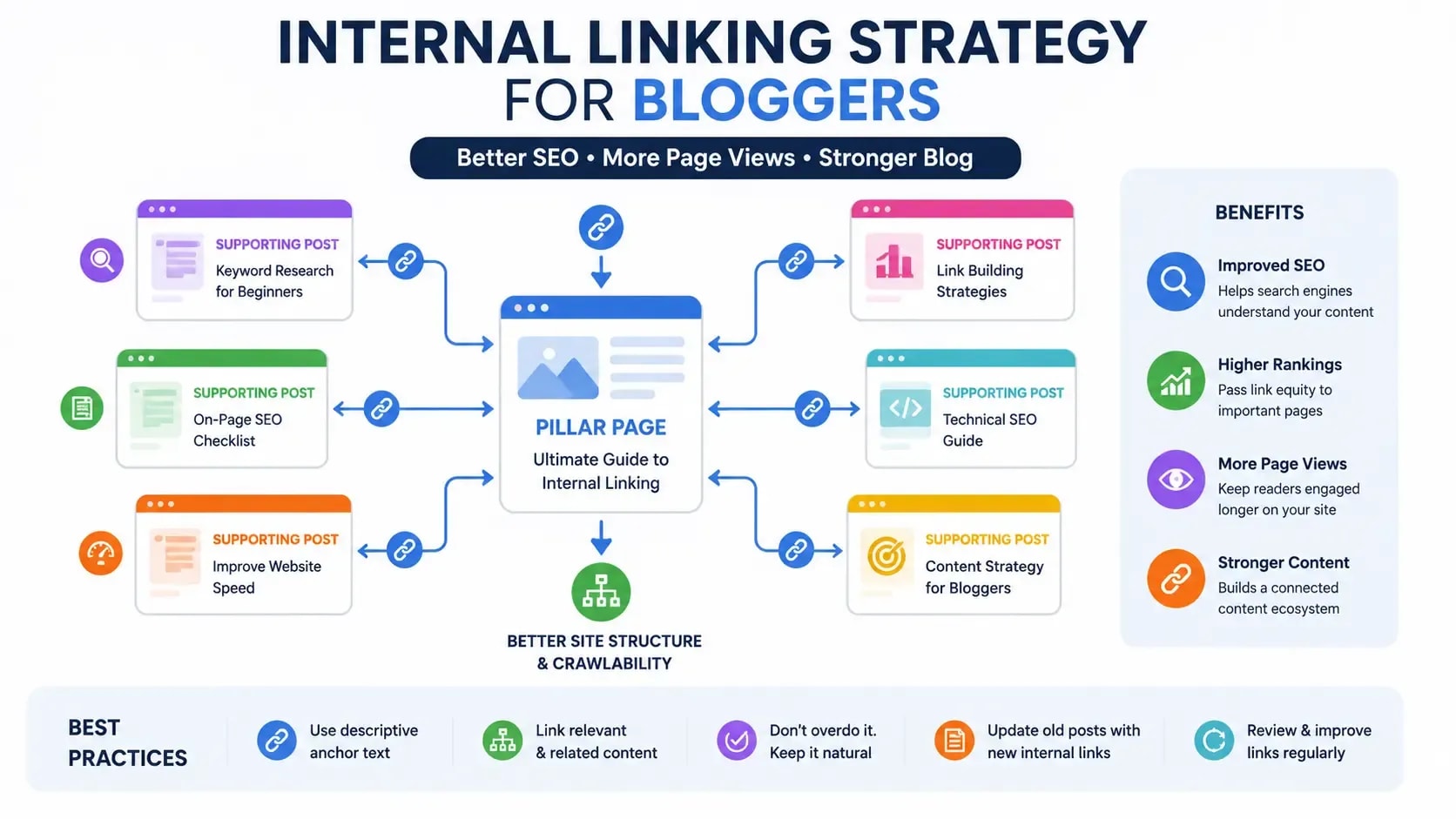
A pillar page explains the broad subject and helps readers choose a direction. Cluster pages go deeper into specific jobs, questions or decisions. Internal links create useful paths between them.
| Component | Main job | Example |
|---|---|---|
| Topic boundary | Defines what belongs in the cluster | Generative engine optimization for solo publishers |
| Pillar page | Explains the subject and routes readers | A working guide to GEO |
| Process page | Shows how to complete one task | How to check AI citations |
| Comparison page | Helps readers choose or distinguish options | SEO vs GEO vs AEO |
| Technical page | Solves one implementation issue | How to implement llms.txt |
| Internal links | Connect each page to a relevant next step | A GEO guide links to its measurement process |
This model is useful, but the labels are not rules. A narrow cluster may not need a large pillar page. A detailed guide can also serve as a process page. What matters is that every URL has a distinct purpose.
How to build topical authority in seven steps
The steps work for a new cluster or a disorganized set of existing posts. If content already exists, start with an inventory. Anobee's content audit guide shows how to decide what to keep, improve, combine or remove before you add more.
1. Set a topic boundary your site can support
Begin with the audience and the business, not a keyword export. A useful boundary sits where three things meet:
- Your audience has a recurring problem.
- Your site has a credible reason to address it.
- The topic supports a product, service, affiliate path or another meaningful goal.
“Digital marketing” is too broad for a small publisher's first cluster. “Email welcome sequences for independent coaches” is easier to cover with depth. The narrower choice makes research, page roles and internal links clearer.
Write a one-sentence boundary before planning URLs:
This cluster helps [audience] solve [defined problem] from [starting point] to [useful outcome].
An exclusion list helps just as much. A cluster about SEO content architecture may cover content audits, topic maps and internal links while leaving technical crawling fixes, local SEO and paid media elsewhere. Those subjects can have their own homes.

2. Map search jobs, not just keyword variations
A keyword list captures wording. Your topic map needs to capture why each search happens.
Sort the topic into real jobs such as:
- understand a concept
- complete a process
- compare two approaches
- choose a tool
- diagnose a problem
- see an example
- maintain or measure the result
Then add the questions, entities and constraints that belong under each job. Someone researching topical authority may need to understand the pillar and cluster model. Later, the same person may need a content audit, an internal link plan or a way to measure the cluster.
This job-based view catches gaps that keyword matching can miss. It also keeps close variants on one page when they serve the same intent.
3. Give every URL one clear role
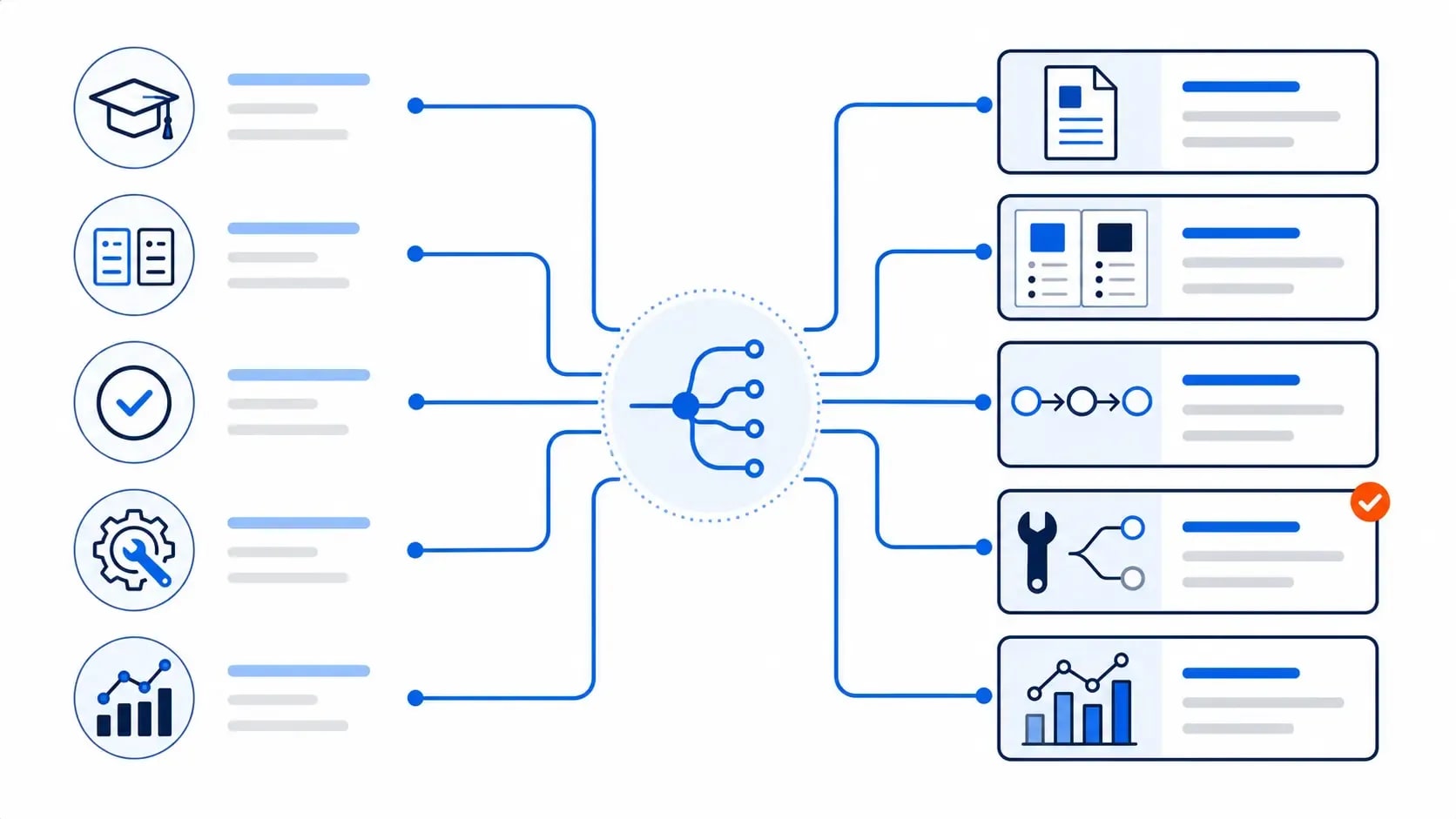
Turn the map into a simple page ledger. For each proposed URL, record:
- the primary search job
- the specific reader it serves
- the question it must answer
- the format that best fits the answer
- the evidence or example that makes it useful
- the pages it should link from and to
If two planned pages have the same reader, intent and answer, they probably should be one page. If one draft tries to satisfy several unrelated decisions, split it only when each part can stand on its own.
Google's SEO Starter Guide recommends organizing a site logically and grouping related pages in directories when that helps users understand how the site works [2]. A clean URL structure supports the plan, but the page's job and links matter more than forcing every cluster into a deep folder tree.
4. Choose a publishing sequence
There is no need to wait until every planned article is ready. Publish the smallest useful cluster first:
- Create the pillar or central guide.
- Publish the supporting page needed for the most important next step.
- Add the page that answers a common objection, comparison or implementation problem.
- Connect the pages and check that no promise leads to an empty destination.
The pillar does not need to rank before a supporting page goes live. It needs to be useful enough to orient the reader and link to the deeper answer. Supporting pages can then return readers to the broader framework or send them to another logical step.
Prioritize by dependency and value. A measurement guide is less useful if the reader has not implemented the process being measured. A tool comparison may be premature if the cluster does not yet explain the task those tools support.
5. Make each page worth keeping
Every cluster page should earn its URL. A complete page answers the main question early, adds the context needed to act, and makes important claims easy to verify.
Useful additions include:
- a worked example with clear limitations
- a reusable checklist or template
- a decision table that explains tradeoffs
- current primary-source documentation
- original observations with a stated method
- a correction to common but unsupported advice
A word-count tool is not a reason to stretch a short answer into a long article. Google says its systems prioritize helpful, reliable information made for people rather than content created to manipulate rankings [1]. One precise page is stronger than several padded versions of the same answer.
6. Build internal links around the reader's next step
Internal links turn a folder of posts into a usable cluster. Add one when another page helps the reader continue, verify a claim or solve the next problem.
Use these patterns:
- Pillar to cluster: Link from the overview to the detailed process or comparison.
- Cluster to pillar: Return to the broader guide when a reader needs context.
- Cluster to cluster: Connect two supporting pages when one is a genuine next step.
- Older page to new page: Add links from established, relevant content when a new resource fills a known gap.

Google says internal anchor text helps people and Google understand a site. It also recommends linking every important page from at least one other page [3]. Descriptive anchors are more useful than repeated “click here” links, but they do not need to repeat the exact target keyword every time.
For a fuller workflow, use this internal linking strategy for bloggers. It covers source-page selection, anchor wording, orphan pages and link maintenance.
7. Measure and maintain the cluster as a system
Publication completes the first version, not the work. The next review should ask whether the cluster attracts the intended searches and moves readers between useful pages.
In Google Search Console, filter the Performance report by the cluster's URL paths or pages. Review:
- impressions for relevant queries
- clicks and click-through rate
- which page appears for each important query
- unexpected queries that reveal a mismatch or new need
- changes across comparable periods
Search Console provides clicks, impressions, CTR and average position, and it can group results by query or page [4]. Use those metrics with business outcomes such as newsletter sign-ups, affiliate clicks or qualified enquiries. Rankings alone do not show whether the cluster helps the site.
Review the cluster when facts change, pages begin competing for the same queries, an important page loses relevant visibility, or readers reach a dead end. Refresh the existing page when its purpose remains valid. Add a new page only when a distinct search job is still uncovered.
A topical authority example from Anobee
Anobee's generative engine optimization cluster shows how one subject can be divided by reader need. The central GEO guide for solo publishers explains the overall operating model. Supporting pages then handle narrower jobs.
| Reader need | Page role | Anobee example |
|---|---|---|
| Understand the whole subject | Pillar guide | Generative Engine Optimization: A Working Guide |
| Separate related concepts | Comparison | SEO vs GEO vs AEO |
| Understand one search feature | Mechanism explainer | How Google AI Overviews Work |
| Improve citation eligibility | Practical process | How to Get Cited by ChatGPT |
| Check current visibility | Measurement process | How to Check AI Citations |
| Evaluate software | Commercial comparison | Best AI Visibility Tracking Tools |
| Handle a technical question | Implementation guide | How to Implement llms.txt |

The architecture follows a reader's progression. A person can learn the subject, understand a platform, implement a tactic, check the outcome and then decide whether a paid tool is worthwhile.
This is an example of cluster design, not proof of SEO performance. The pages have different publication dates, and Anobee does not have a controlled result that isolates the cluster from every other ranking factor. Sharing the map is useful because it makes the editorial decisions visible without turning them into a ranking claim.
The cluster can also reveal its own gaps. If readers repeatedly reach the GEO guide looking for a detailed citation-tracking template, that need may justify a new resource. If two existing pages appear for the same queries and answer the same question, consolidation may be better than expansion.
How many articles do you need for topical authority?
There is no reliable universal number. The right count is the number of distinct pages required to cover the important search jobs within your chosen boundary.
For a first release, one central guide plus three high-value supporting pages is a manageable starting shape. That is a planning suggestion, not a ranking threshold. A narrow subject may be well served by the set. A broad or technical subject may require many more pages, stronger evidence and deeper expertise.
Ask these questions before adding another article:
- Does a distinct audience need this answer?
- Is the intent different from an existing page?
- Can the new page add evidence, process or detail that does not fit elsewhere?
- Is there a natural place to link it from?
- Will somebody maintain it when the topic changes?
If the answer is no, improve an existing page instead. A content cluster should become more useful as it grows, not merely larger.
Common topical authority mistakes
Starting with a topic that is too broad
A small team that chooses “marketing” will struggle to cover it with depth. Narrow the subject by audience, problem, platform or stage. Expansion can wait until the first boundary works.
Creating one page for every keyword variant
Keywords with different wording often share the same intent. Separate them only when the reader needs a genuinely different answer. Otherwise, one stronger page is easier to maintain and less likely to compete with another URL.
Publishing the pillar and forgetting the links
A pillar page cannot route readers to pages it never mentions. Add links during drafting, then revisit older pages after every cluster release. Look for an exact moment when the new article solves the reader's next problem.
Copying the same summary across the cluster
Related pages need shared context, but they should not repeat the same article with a different title. Give each page its own decision, process, example or evidence.
Measuring page rankings in isolation
One page can lose clicks while another page in the cluster gains visibility for the better-matched intent. Review page and query data together. Then connect search performance to conversions and session paths.
Treating publication as the finish line
Links break. Search language changes. Product details and official guidance change. Schedule reviews based on the subject's volatility and update a page when the change helps the reader.
A simple cluster planning template
You can plan the first version in one sheet. Use one row per page and include these fields:
| Field | What to record |
|---|---|
| Topic boundary | The audience and problem the cluster covers |
| Search job | Learn, compare, choose, implement, fix or measure |
| Primary page | The one URL assigned to that job |
| Supporting questions | Related questions answered on the same page |
| Unique value | Example, evidence, template or decision support |
| Link from | Existing pages that can introduce this resource |
| Link to | The next useful pillar or cluster page |
| Success signal | Relevant queries, clicks, engagement or conversions |
| Review trigger | The fact, product or performance change that requires action |
Keep the map small enough to use. Eight purposeful URLs with clear dependencies will take you further than 100 keywords that nobody has assigned or prioritized.
Final answer: build depth one useful page at a time
How to build topical authority is not really a question about article volume. It is a question about coverage: can your site answer a defined set of needs with clear, trustworthy pages that work together?
Choose a narrow boundary. Map the search jobs. Give each URL one role. Publish the smallest useful cluster, link it around the reader's next step, and measure the group instead of chasing an invented authority score.
If you already have a large archive, begin with the content audit guide. It will help you find the pages worth improving, combining or connecting before you create anything new.
Frequently Asked Questions
What is topical authority in SEO?
Topical authority is a planning concept for demonstrating useful, consistent coverage of a defined subject. A strong topic cluster answers related search needs with distinct pages, credible evidence and deliberate internal links. It is not a public Google metric or a guarantee that a page will rank.
How many articles do I need for a topic cluster?
There is no universal article count. Start with one pillar page and the few supporting pages needed to answer the most important distinct search needs. Add another article only when it serves a real intent that existing pages cannot cover well without becoming unfocused.
How long does it take to build topical authority?
There is no fixed timeline. It depends on the topic, competition, site history, content quality, crawling, links and publishing resources. Track cluster-level impressions, clicks, relevant queries and conversions over comparable periods instead of promising a result by a certain date.
What is the difference between a pillar page and a cluster page?
A pillar page gives a useful overview of a broad subject and routes readers to deeper resources. A cluster page handles one narrower search need, such as a process, comparison, tool choice or technical question. The pages should have distinct purposes and link to each other when the next step is relevant.
Can a small or new website build topical authority?
Yes. A smaller site can choose a narrow subject where it has a credible reason to publish, cover the essential search needs well and expand carefully. A focused cluster is usually more practical than trying to cover an entire industry at once.
Sources and References
Was this guide helpful?
Your answer helps Anobee improve future updates.

Written by
Bibek Thapa
AI-Powered Digital Growth Strategist
Bibek Thapa works across AI workflows, SEO, AI search optimization, content strategy, website growth, and productivity systems. Anobee documents practical lessons, tools, experiments, and systems for improving digital presence.
- AI workflows
- Digital growth
- SEO
- GEO
- AEO
- Content strategy
- Website growth