SEO & AI Search
How to Get Cited by ChatGPT: 12 Practical Tactics Guide
By Bibek Thapa · Updated · 15 min read
Quick Answer
To improve your chance of being cited by ChatGPT, let OAI-SearchBot crawl your site, keep important pages indexable, answer specific questions clearly, publish evidence worth referencing, and measure citations across a fixed set of prompts. These steps improve eligibility and usefulness, but no tactic guarantees placement.

Table of ContentsOn this page
Key Takeaways
- Allow OAI-SearchBot and its published IP ranges; GPTBot is a separate control for model training.
- Write for the reader first, but make each important answer clear enough to understand without surrounding context.
- Original evidence, transparent sourcing, and accurate updates give a page a stronger reason to be referenced.
- Schema and llms.txt can support site organization, but neither is a proven ChatGPT citation lever.
- Track the same prompts over time and record both brand mentions and clickable citations.
You can make a page easier for ChatGPT to find, understand, and reference. You cannot force ChatGPT to cite it.
That distinction matters. Most advice on this topic jumps from a useful observation to a guarantee. It labels sentence lengths, schema types, or content blocks as “proven” without showing a controlled test. A practical system starts with what OpenAI confirms, then treats everything else as a hypothesis to measure.
This guide gives you that system. It covers technical eligibility, content quality, authority signals, and measurement. It also explains what we cannot prove yet.
What does it mean to be cited by ChatGPT?
A ChatGPT citation is a clickable reference attached to information in a response that used web search. The link lets the reader open the source and check the claim.
ChatGPT may search automatically when a question benefits from current information. A person can also select Search manually. OpenAI says responses using web search may include citations, and it warns that search results and citations can still be incomplete, outdated, or wrong [1].
This creates three different outcomes:
| Outcome | What the reader sees | What to record |
|---|---|---|
| No visibility | Your brand and page do not appear | The prompt, date, market, and model or mode |
| Brand mention | ChatGPT names your brand without linking your page | The exact wording and surrounding sources |
| Citation | ChatGPT links a specific Anobee URL as a source | The cited URL, supported claim, and citation position |
A mention is not a citation. A citation is not automatically a click. Track the three outcomes separately.
How does ChatGPT find sources?
OpenAI does not publish a complete source-selection formula. It does confirm that ChatGPT Search can rewrite a prompt into one or more targeted queries and send them to search providers [1]. It also says search placement uses multiple factors intended to surface relevant and reliable information, with no guarantee of placement [1].
This means you should avoid two common claims:
- “ChatGPT ignores search rankings.” OpenAI uses search providers, so conventional discoverability can still affect the candidate pool.
- “A specific paragraph format makes ChatGPT quote you.” Clear formatting may help comprehension, but OpenAI has not published a required word count, heading pattern, or answer-capsule specification.
Think in layers instead: eligibility, relevance, evidence, reputation, and measurement.
The C.I.T.E. framework
The C.I.T.E. framework is a working checklist, not a claim about OpenAI’s algorithm:
- Crawlability: Can OpenAI access the page?
- Information value: Does the page answer the question accurately and add useful detail?
- Trust: Can a reader verify who published the information and where the evidence came from?
- Evaluation: Are you measuring repeated prompts instead of relying on one screenshot?
The 12 tactics below fit inside those four parts.
1. Allow OAI-SearchBot to crawl the site
OAI-SearchBot is the most important technical check because OpenAI uses it to surface websites in ChatGPT Search.
OpenAI states that sites opting out of OAI-SearchBot will not appear in ChatGPT search answers, although they may still appear as navigational links. OpenAI recommends allowing the crawler in robots.txt and permitting requests from its published IP ranges [2].
Check yourdomain.com/robots.txt for a block such as:
User-agent: OAI-SearchBot
Disallow: /
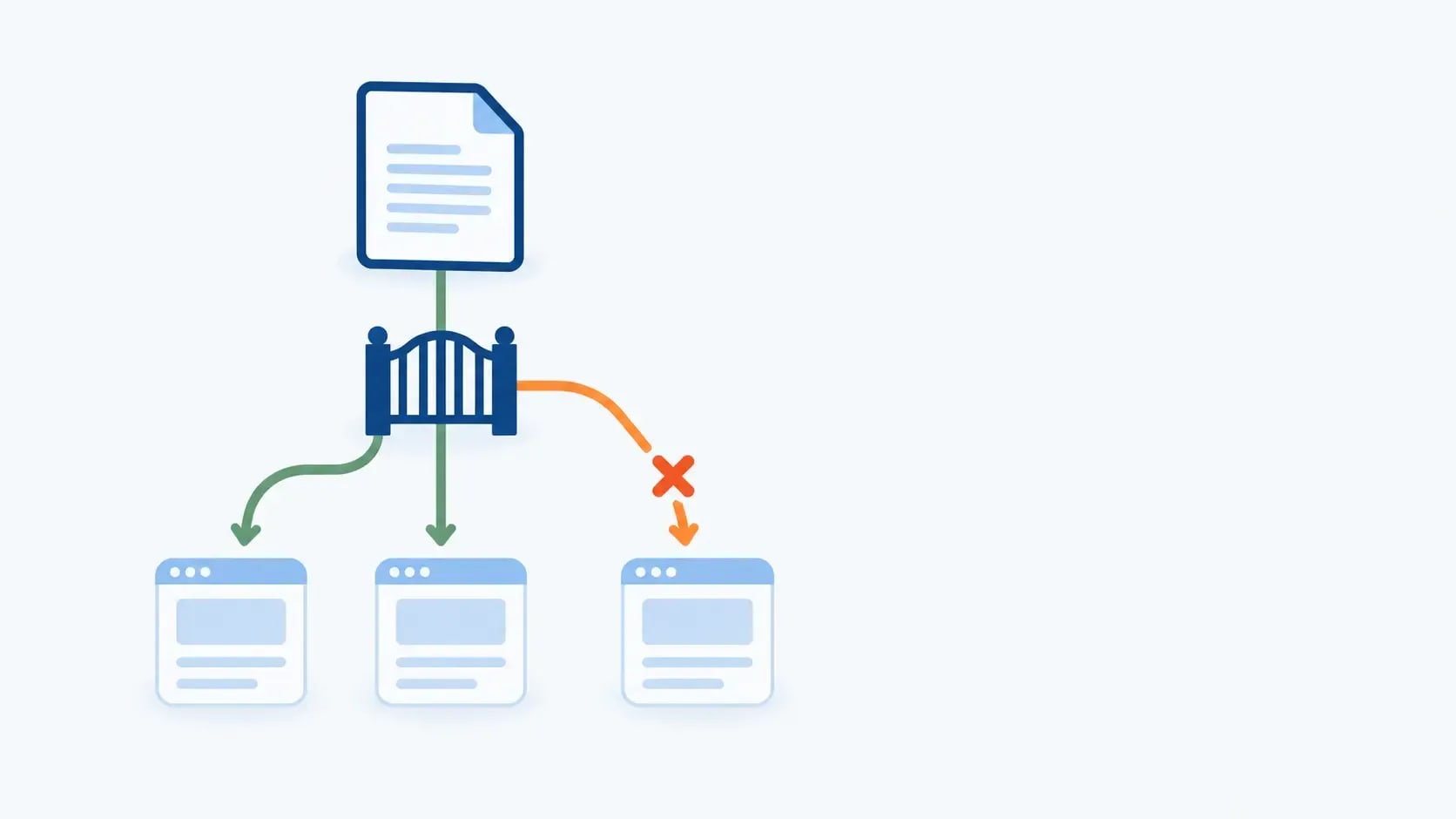
If you use Cloudflare, another CDN, or a web application firewall, check server logs as well. A permissive robots.txt file does not help if the infrastructure blocks the crawler’s requests.
OpenAI notes that a robots.txt change can take about 24 hours to affect its systems [2]. That is a crawler-processing estimate, not a citation timeline.
2. Manage OAI-SearchBot and GPTBot separately
You can allow ChatGPT Search discovery without automatically allowing content to be used for training OpenAI’s foundation models.
OpenAI documents separate controls. OAI-SearchBot is for search visibility. GPTBot crawls content that may be used to improve and train foundation models. The settings are independent [2].
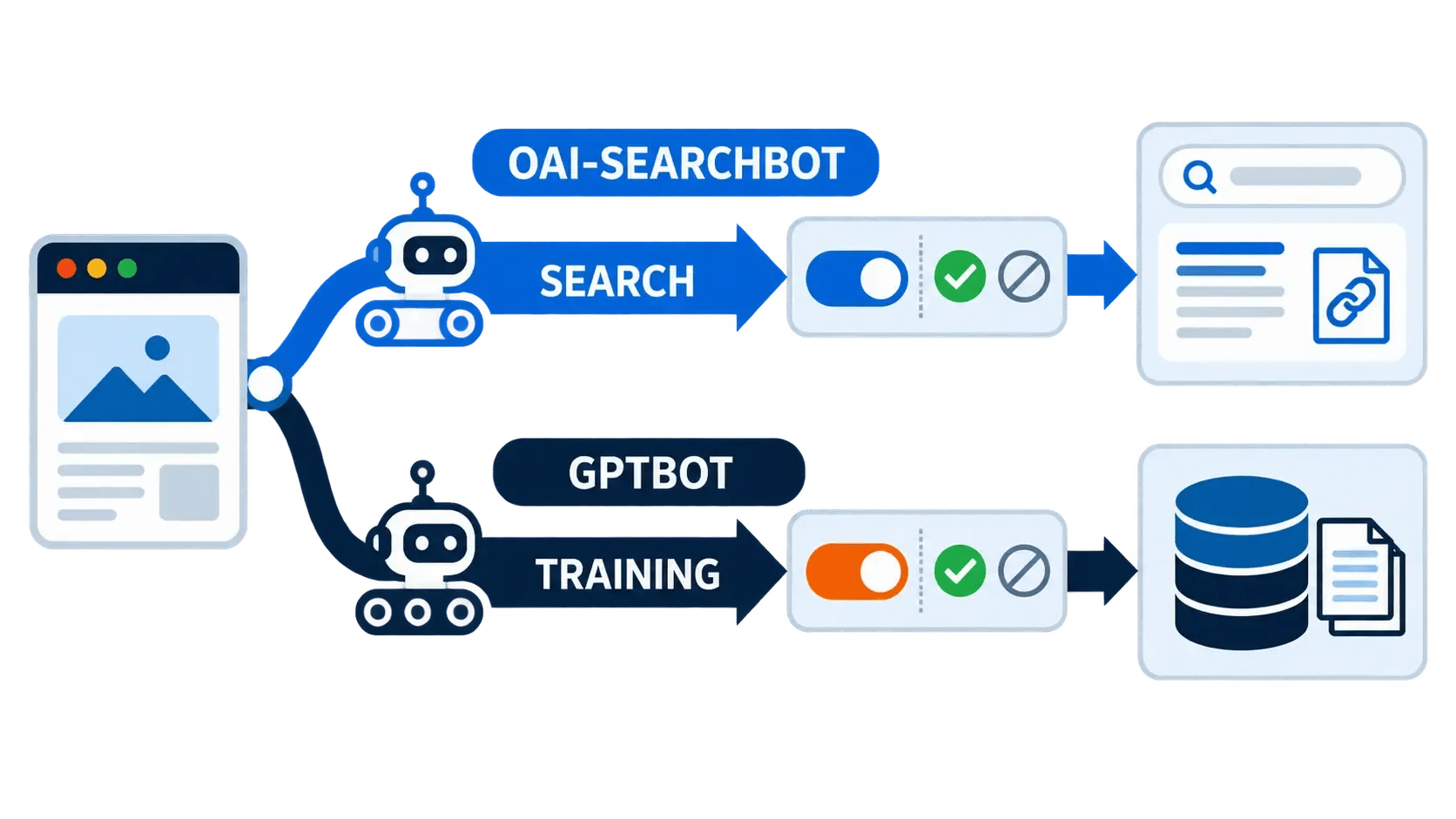
This is useful when a publisher wants search exposure but has a different policy for model training. Do not tell readers they must allow GPTBot to earn ChatGPT Search citations. OpenAI’s documentation does not support that claim.
ChatGPT-User is different again. It can visit a page because a person requested it, but OpenAI says it is not the crawler used to determine Search inclusion [2].
3. Keep important pages indexable and technically accessible
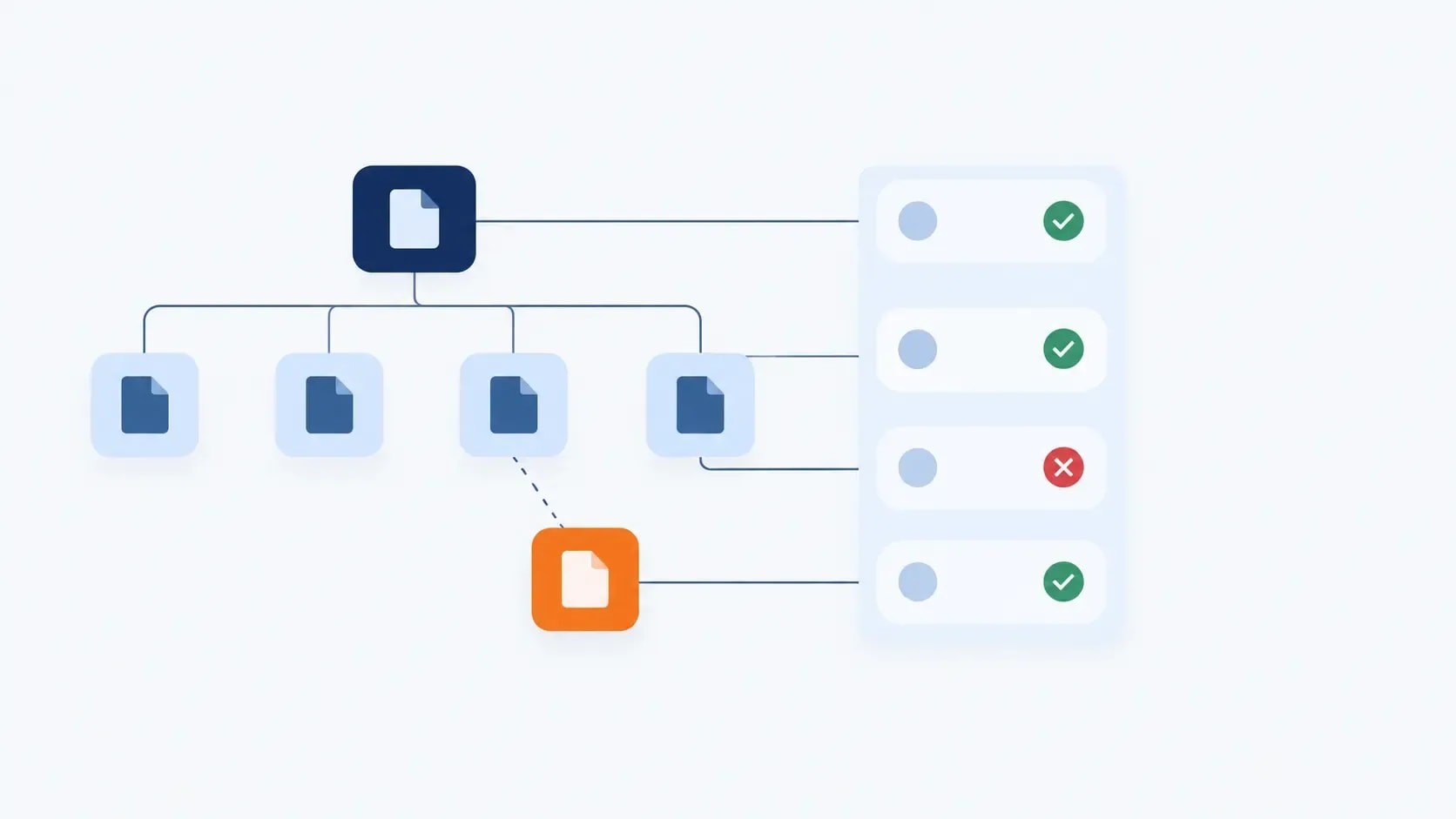
A citation candidate should return a successful status, declare the intended canonical URL, and avoid accidental noindex directives.
Run a basic check for:
- HTTP 200 status
- no unexpected redirect chain
- no
noindexin HTML or theX-Robots-Tagheader - a sensible canonical URL
- useful text available in the rendered page
- no login wall or consent flow hiding the main answer
- no CDN rule blocking OpenAI’s published searchbot IP ranges
Also maintain ordinary search discoverability. OpenAI says ChatGPT Search may use partner search providers and send them rewritten queries [1]. Good technical SEO therefore remains part of the foundation.
For a broader view of how traditional search, answer engines, and generative search overlap, read SEO vs GEO vs AEO.
4. Answer the main question early
Give the reader a direct answer before the long explanation. The purpose is clarity, not hitting a supposed AI word count.
A useful opening answer usually does four things:
- Names the action.
- States the important limitation.
- Defines any unfamiliar term.
- Leads naturally into the supporting detail.
For example:
To make a page eligible for ChatGPT Search, allow OAI-SearchBot and its published IP ranges. Eligibility does not guarantee that ChatGPT will cite the page.
That answer is easy to verify and hard to misread. It does not need to be exactly 20, 25, or 40 words. It also does not need to be free of links as an algorithmic rule. Place citations where readers need evidence.
5. Make each important section self-contained
A reader should understand the section even if they arrive from a search result, table of contents, or shared link.
Use descriptive headings. Name the entity instead of relying on vague pronouns. Keep one main idea per paragraph. Define acronyms such as retrieval-augmented generation (RAG), generative engine optimization (GEO), and answer engine optimization (AEO) on first use.
This is not permission to turn an article into a stack of repetitive answer boxes. Google’s official guidance for generative search says there is no need to write in a special way for AI systems or capture every keyword variation [3]. Write naturally, then edit for precision.
6. Publish evidence that deserves a citation
If ten pages repeat the same general advice, there is little reason to cite the eleventh. Original evidence creates a distinct source.
Useful first-party evidence can include:
- a documented content audit with a defined sample
- a survey with the questionnaire, dates, and respondent count
- anonymized Search Console or analytics data with the period stated
- a before-and-after experiment with the changed variables listed
- a comparison based on a visible scoring method
- screenshots or outputs that readers can inspect
Small evidence can still be useful. It simply needs honest limits. A review of 15 pages is a 15-page audit, not an industry study.
Anobee has not supplied a documented before-and-after ChatGPT citation test for this refresh. For that reason, this guide does not claim that Anobee “proved” these tactics or earned citations within a particular number of weeks.
7. Cite primary sources close to the claim
Strong sourcing makes the page easier for readers to trust and fact-check. Link the claim to the organization that actually published the policy, dataset, or result.
Use an official OpenAI page for OpenAI crawler behavior. Use Google Search Central for claims about Google Search. If a vendor publishes a citation study, explain its sample, collection date, prompts, markets, and limitations before using the number.
Avoid citation theatre:
- a reference list containing sources never used in the article
- a marker linking to a page that does not support the sentence
- a vendor summary cited instead of the original study
- a current claim supported only by an old dataset
- a statistic copied without its sample or measurement method
The source should let the reader verify the claim in one step.
8. Add clear authorship and entity context
Show who wrote the article, why they are qualified to cover it, when it was updated, and how corrections are handled.
Useful trust elements include:
- a named author linked to a real author page
- a concise biography tied to the subject
- an About page that explains the publication
- editorial, fact-checking, and corrections policies
- organization and author structured data that match visible facts
- consistent names for the brand, author, products, and methods
This does not manufacture authority. It removes ambiguity. Google’s people-first guidance asks whether content shows clear sourcing, evidence of expertise, and background about the author or publisher [4].
9. Build a focused topic cluster and internal links
One page should solve one search job, then link to supporting pages that answer the next useful question.
For this topic, the core cluster can include:
- how ChatGPT citations work
- a practical generative engine optimization guide
- SEO, GEO, and AEO compared
- how to implement llms.txt
- how to measure AI citations and brand mentions
- platform-specific guides for ChatGPT, Perplexity, Gemini, and Google AI features
Use descriptive anchors and link only when the destination helps the reader continue. Do not create near-duplicate pages for every wording variation of the same query.
10. Use structured data for its real purpose
Use Article or BlogPosting schema to describe visible facts such as the headline, author, publication date, modified date, image, and publisher.
Do not promise that schema will cause a ChatGPT citation. OpenAI does not publish a special schema requirement for ChatGPT Search. Google also says there is no special schema.org markup required for its generative search features and warns against overfocusing on structured data [3].
FAQPage markup deserves extra caution. A visible FAQ section may help readers, but that does not make FAQ schema a ChatGPT citation tactic. Add markup only when it accurately represents the page and fits the current requirements of the search feature you are targeting.
For this article, Article or BlogPosting plus site-level BreadcrumbList is the practical baseline.
11. Update facts, not just dates
Refresh a page when the guidance, product, evidence, links, or reader questions have changed. Record meaningful changes in a short changelog.
Do not change the date and call the page fresh. Google explicitly warns against changing page dates when the content has not substantially changed [4].
A useful refresh process is simple:
- Recheck official sources.
- Test every important link.
- Remove unsupported numbers and guarantees.
- Update screenshots and instructions that no longer match the product.
- Add new evidence or questions only when they improve the answer.
- Update
dateModifiedand the visible date after the work is complete.
This page is a real example. The refresh removes unsupported claims about answer-capsule percentages, schema effects, platform freshness weights, and guaranteed timelines. It also replaces a broken internal link.
12. Measure ChatGPT citations with a repeatable prompt set
Citation tracking is noisy. A single prompt on a single day is an observation, not a trend.
Create a prompt set based on real audience questions. Include informational, comparison, and recommendation prompts where they fit your business. Then run the same set on a fixed schedule.
Record:
| Field | Example |
|---|---|
| Prompt ID | CG-07 |
| Exact prompt | How can a small site get cited by ChatGPT? |
| Date and time | 2026-08-26, 10:00 NPT |
| Market or location | Global English |
| Product and mode | ChatGPT with Search |
| Brand mentioned | Yes or no |
| Citation present | Yes or no |
| Cited URL | Full URL |
| Supported claim | Short description |
| Other cited domains | Domain list |
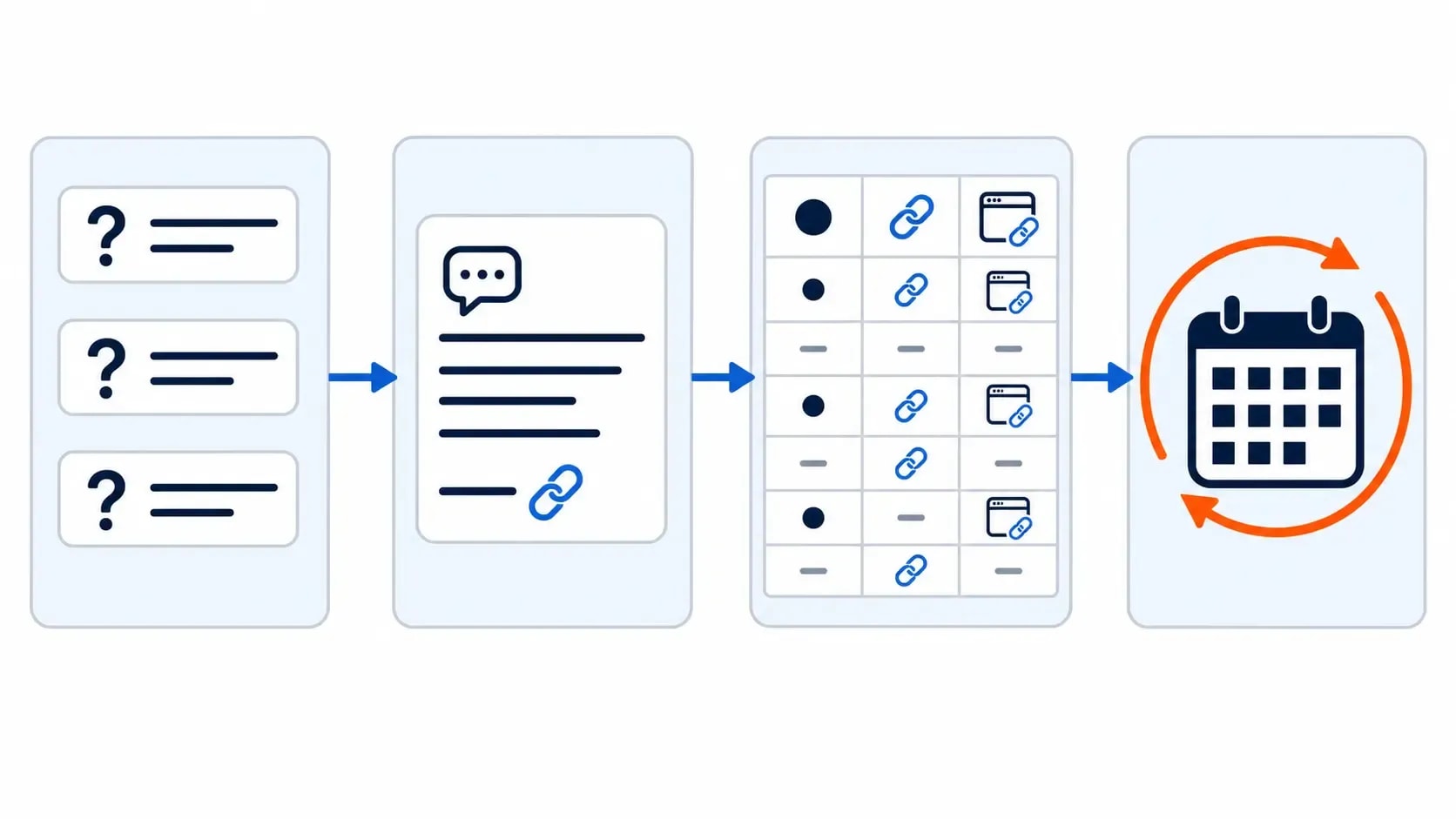
Run the baseline before editing. Repeat it after publishing on a consistent schedule. Do not keep changing prompts until the preferred brand appears. That measures prompt manipulation, not visibility.
Where possible, combine prompt tracking with server logs and referral analytics. ChatGPT referral traffic can show visits, but it cannot tell you how often a citation appeared without receiving a click.
What about llms.txt?
An llms.txt file is an optional, human-readable map of a site’s important resources. It can clarify what the site covers and point to useful pages.
Treat it as housekeeping, not a ranking lever. OpenAI’s current crawler guidance tells publishers to manage OAI-SearchBot through robots.txt and published IP ranges; it does not identify llms.txt as a ChatGPT Search ranking factor [2].
If your site already has a concise, maintained llms.txt file, keep it. If it becomes stale or duplicates a well-maintained sitemap badly, fix it. The technical priorities remain crawl access, indexable pages, accurate content, and measurement.
A practical 30-day action plan
The goal of the first month is to establish a baseline and improve weak pages. It is not to promise a citation by day 30.
Week 1: Establish eligibility and a baseline
- Check
robots.txtfor OAI-SearchBot rules. - Confirm the CDN or firewall allows OpenAI’s published IP ranges.
- Audit status codes, canonical tags, and robots directives.
- Create 20–30 stable prompts grouped by intent.
- Record current mentions, citations, and cited competitors.
Week 2: Improve the highest-value pages
- Rewrite weak openings with direct answers.
- Split sections that mix unrelated ideas.
- Add primary sources beside challengeable claims.
- Correct author, updated-date, and Article schema fields.
- Remove unsupported statistics and fake precision.
Week 3: Add information gain
- Publish one small, transparent audit or dataset.
- Explain the sample, date, method, and limits.
- Add the finding to the most relevant existing page.
- Strengthen internal links across the topic cluster.
Week 4: Recheck and decide
- Run the same prompt set again.
- Compare mention rate, citation rate, and cited URLs.
- Review competitor sources that repeatedly appear.
- Plan the next update around a real evidence gap.
- Leave pages alone when the new data does not justify a change.
How long does it take to get cited by ChatGPT?
There is no reliable fixed timeline. OpenAI says its systems may take about 24 hours to adjust after a robots.txt change, but that only concerns crawler rules [2]. It does not mean a page will be crawled, selected, or cited within 24 hours.
Measure over several weeks with the same prompts. Record the page version and update date so you can connect an observed change to the work performed without claiming causation too early.
Can a new website get cited by ChatGPT?
A new site can be eligible when OAI-SearchBot can access it and the content is relevant and reliable. OpenAI does not publish a minimum domain age, backlink count, or third-party authority score for inclusion.
That does not mean authority is irrelevant. A new site has less evidence of reputation and fewer external references. Its strongest path is to publish distinctive, verifiable information and earn legitimate mentions from relevant sources—not manufacture forum posts or directory listings.
The bottom line
Getting cited by ChatGPT starts with eligibility and ends with evidence.
Allow the correct crawler. Keep the page accessible. Answer the real question. Publish information worth referencing. Show who produced it. Measure the same prompts over time.
Skip the fake certainty. There is no proven paragraph length, schema switch, freshness percentage, or 30-day formula that guarantees a citation. A small practical system beats a complicated collection of unverified tactics.
Update log
- August 26, 2026: Replaced unsupported “proven” and “tested” claims, corrected OpenAI crawler guidance, removed a broken internal link, clarified schema and llms.txt limitations, and added a repeatable citation-measurement process.
Frequently Asked Questions
How long does it take to get cited by ChatGPT?
There is no published or reliable fixed timeline. OpenAI says a robots.txt change can take about 24 hours to affect its systems, but crawling eligibility is not the same as receiving a citation. Measure a stable prompt set over several weeks rather than promising a deadline.
Can a new website get cited by ChatGPT?
A new website can be eligible if OAI-SearchBot can crawl it and the page provides relevant, reliable information. OpenAI does not publish a minimum domain age or authority requirement, but inclusion and placement are not guaranteed.
Does FAQ schema help a page get cited by ChatGPT?
There is no official evidence that FAQPage schema causes ChatGPT citations. Use structured data only when it accurately represents visible content and serves a valid search purpose. Clear, useful answers matter more than adding markup for its own sake.
Does llms.txt help a website rank in ChatGPT?
No official OpenAI documentation identifies llms.txt as a ChatGPT Search ranking factor. It can be a low-cost map of important resources, but it should not replace crawl access, indexable pages, useful content, or measurement.
Sources and References
Was this guide helpful?
Your answer helps Anobee improve future updates.

Written by
Bibek Thapa
AI-Powered Digital Growth Strategist
Bibek Thapa works across AI workflows, SEO, AI search optimization, content strategy, website growth, and productivity systems. Anobee documents practical lessons, tools, experiments, and systems for improving digital presence.
- AI workflows
- Digital growth
- SEO
- GEO
- AEO
- Content strategy
- Website growth