SEO & AI Search
SEO vs GEO vs AEO: What Is the Difference?
Understand SEO, GEO, and AEO without the hype, including what changes for Google AI features and what still stays the same.
By Bibek Thapa · Published Aug 9, 2026 · Updated Aug 10, 2026 · 5 min read
Quick Answer
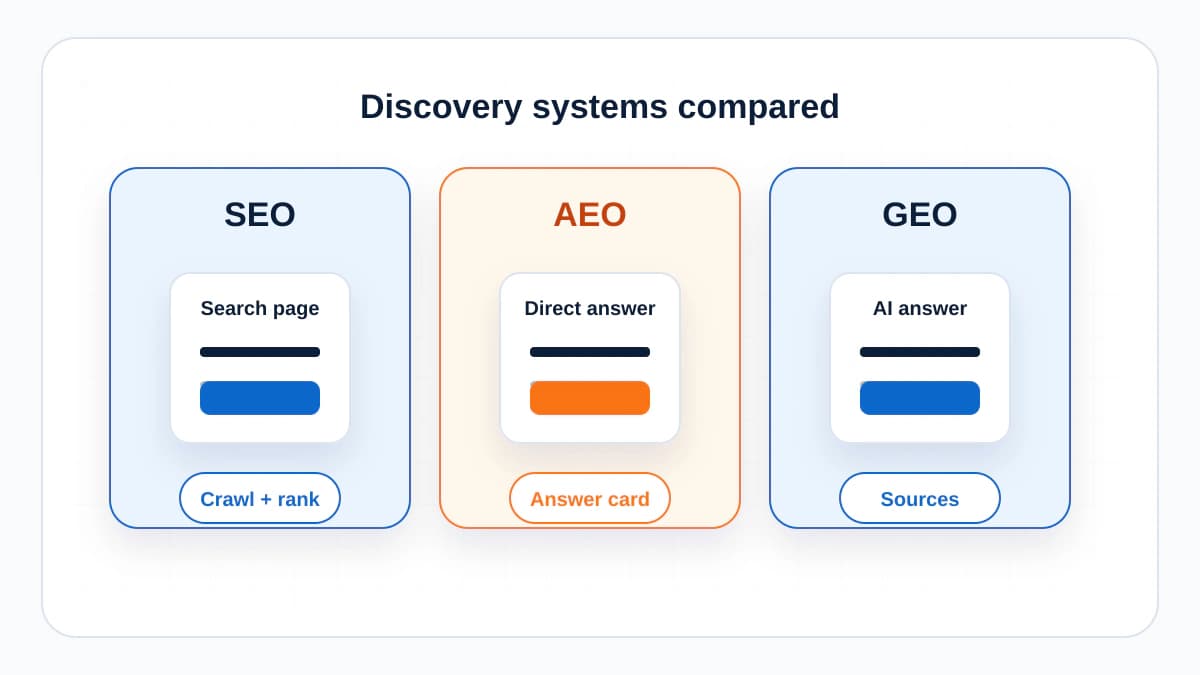
SEO helps search engines discover, understand, and rank pages. AEO focuses on answering specific questions clearly. GEO is the newer label for being useful in generative AI search experiences. In practice, the foundation is the same: helpful content, crawlable pages, clear structure, strong sources, and real usefulness.
Key Takeaways
- SEO, AEO, and GEO overlap more than they compete.
- Google says its core SEO best practices still apply to AI features in Search.
- Do not chase fake GEO tricks before fixing content quality, crawlability, structure, and trust.
- Answer-first formatting helps readers, snippets, and AI search systems.
Table of Contents
SEO, GEO, and AEO sound like three departments fighting for budget. They are not. They are three labels for a similar problem: how do you make useful information easy for people and machines to find, understand, and trust?
The search intent here is informational. The reader wants a clear difference, but they also want to know what to do next. The useful answer is not a glossary. It is a priority order.
What SEO Means
SEO stands for search engine optimization. It is the practice of helping search engines discover, crawl, understand, and present your content to people searching for relevant topics. Good SEO includes technical foundations, content quality, page experience, internal links, structured data, and authority signals.
SEO is not just keywords. Keywords help you understand language and demand, but the work is broader. A page can target the right phrase and still fail because it is thin, slow, confusing, unsupported, or buried deep in the site.
What AEO Means
AEO usually means answer engine optimization. It focuses on giving direct, clear answers to specific questions. It grew from featured snippets, People Also Ask boxes, voice search, and FAQ-style discovery.
AEO is useful because people often search in questions. A strong answer-first section helps readers quickly decide whether the page is relevant. It also gives search systems a cleaner passage to understand.
What GEO Means
GEO usually means generative engine optimization. It is used to describe visibility in AI-generated answers, AI Overviews, AI Mode, chat-based search, and other generative discovery experiences.
The risk with GEO is hype. Some advice makes it sound like you need a secret file, a special prompt layer, or a completely new content format. Google's own guidance is more grounded: SEO best practices remain relevant for AI features in Search, and useful, unique content still matters.
Where They Overlap
- Clear page purpose helps SEO, AEO, and GEO.
- Concise answers help readers and answer-style results.
- Strong headings help humans scan and systems parse.
- Original examples and analysis make content less commodity.
- Sources and author context improve trust.
- Crawlable, indexable pages are still the foundation.

What Actually Changes for AI Search
AI search often breaks a broad topic into smaller implied questions. A person may search for one phrase, but the system may need definitions, comparisons, caveats, steps, and examples to answer well. That means shallow pages are easier to summarize but harder to cite as useful.
The practical response is to write pages that answer the main question and the follow-up questions a real reader would ask. Include definitions, decision criteria, examples, limitations, and when-to-use guidance.
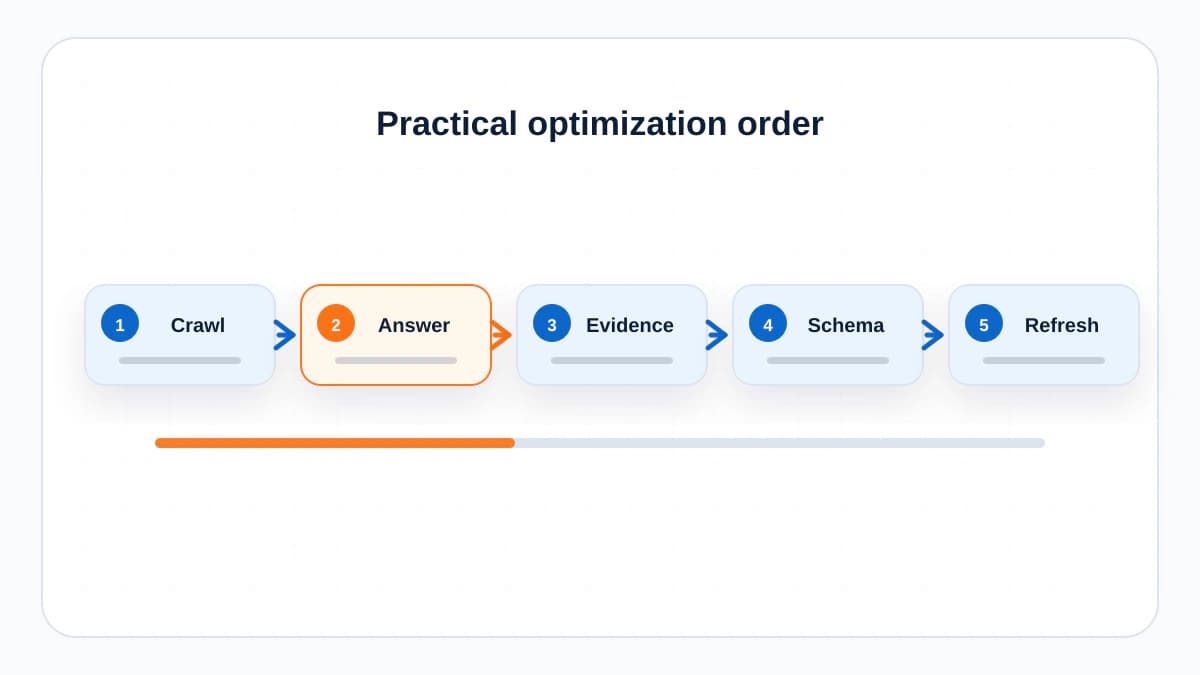
A Practical Optimization Order
- Fix crawlability, indexing, canonicals, sitemap, and internal links.
- Map each page to one clear search intent.
- Add a concise answer near the top when the topic suits it.
- Use H2s and H3s that reflect real sub-questions.
- Support claims with sources, examples, screenshots, or first-hand experience.
- Add schema where it accurately describes the page.
- Refresh content when facts, tools, pricing, or search behavior change.
The Bottom Line
SEO is the foundation. AEO is answer clarity. GEO is visibility in generative search experiences. Treat them as a connected system. If your page is useful, clear, crawlable, well structured, and trustworthy, you are already doing the work that matters most.
Frequently Asked Questions
Is GEO replacing SEO?
No. GEO is better understood as an extension of search visibility work for generative AI experiences. Crawlability, helpful content, technical SEO, links, and trust still matter.
Do I need a separate GEO strategy?
You may need GEO-aware formatting and content planning, but not a totally separate strategy. Start by improving the content and technical foundation that already supports SEO.
What is the simplest AEO improvement?
Add concise, accurate answers near the top of pages that target specific questions, then support those answers with details, examples, and sources.
Sources and References

Written by
Bibek Thapa
AI-Powered Digital Growth Strategist
Bibek Thapa works across AI workflows, SEO, AI search optimization, content strategy, website growth, and productivity systems. Anobee documents practical lessons, tools, experiments, and systems for improving digital presence.
- AI workflows
- Digital growth
- SEO
- GEO
- AEO
- Content strategy
- Website growth