AI Tools & Workflows
Best AI SEO Tools by Budget: What $20, $45 and $99 Buy
Compare AI SEO content tools by real entry price, monthly limits and workflow fit, from NeuronWriter and Frase to Surfer, Clearscope and Content Harmony.
By Bibek Thapa · Published Sep 7, 2026 · 17 min read
Quick Answer
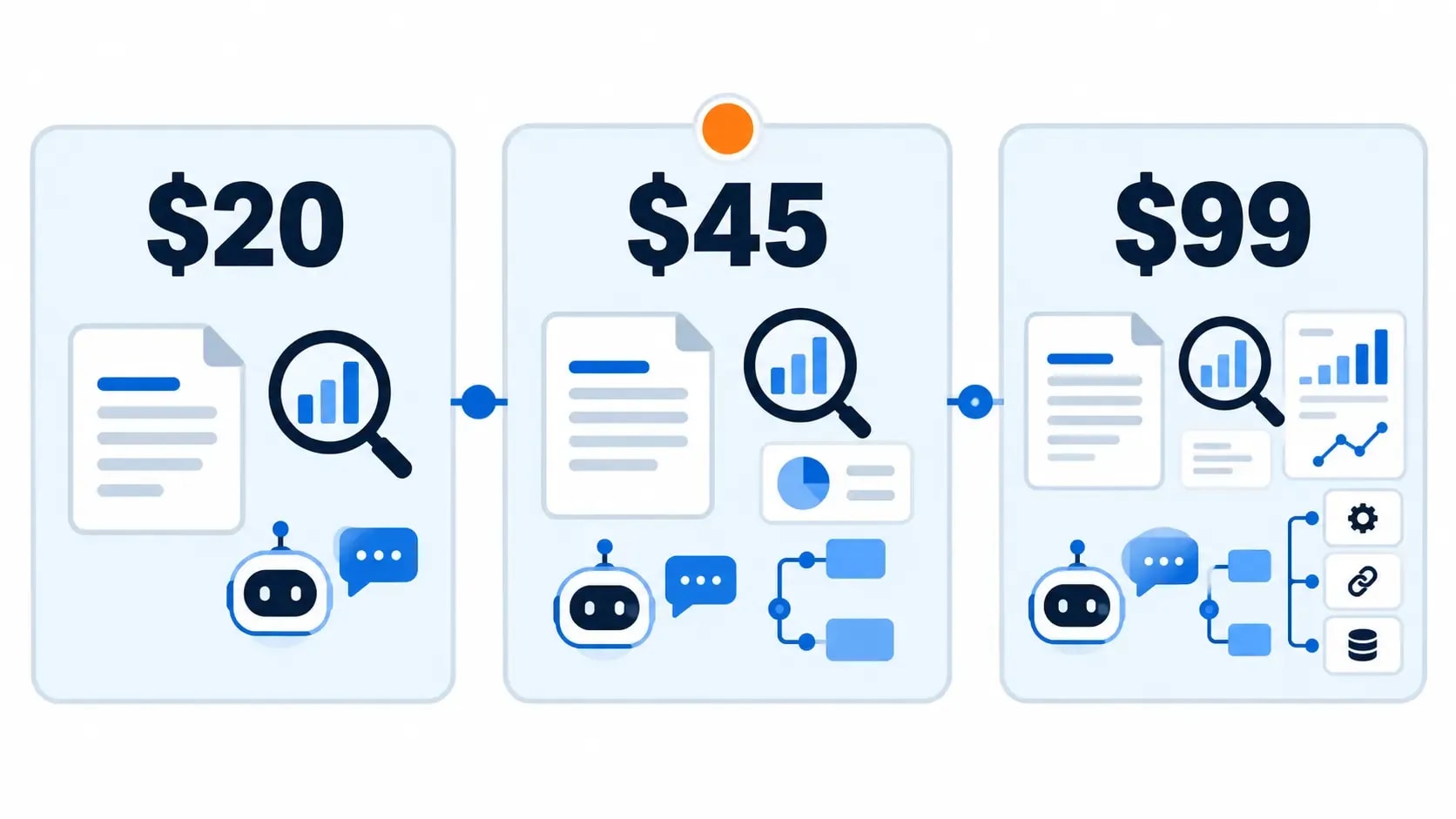
The best AI SEO tool depends on the work and budget. NeuronWriter is the lowest-cost dedicated optimizer at $23 monthly or $19 with annual billing. Frase Starter combines content, audits and publishing at $49 monthly. Surfer Standard at $99 with annual billing suits teams that need higher document limits and AI-visibility features. Prices were checked September 6, 2026.
Table of ContentsOn this page
- How this comparison was built
- Best AI SEO tools at a glance
- What counts as an AI SEO tool here?
- Around $20: NEURONwriter Bronze
- Around $45 to $50: four different purchases
- Around $99: choose volume or process
- Above $99: when Clearscope becomes reasonable
- Surfer vs Frase vs NEURONwriter
- What pricing pages cannot tell you
- A fair trial method for AI content optimization tools
- Calculate the cost per useful article
- Which AI SEO tool should you choose?
- Common buying mistakes
- The bottom line
Key Takeaways
- NeuronWriter Bronze is the lowest-cost option here at $23 monthly or $19 per month with annual billing.
- Frase Starter costs $49 monthly and combines content creation, audits, CMS publishing and basic AI visibility.
- Surfer Standard costs $99 per month with annual billing and is the stronger fit for higher-volume optimization workflows.
- Content Harmony sells repeatable content workflows with unlimited users; Clearscope starts at $129 for editorial teams.
- Tool scores are private recommendations, not Google ranking data, and no tool can guarantee rankings or AI citations.
The best AI SEO tools do different jobs at surprisingly similar prices. A $49 plan might give you a content editor, AI drafting and site audits. Another $50 product may focus on five carefully researched content briefs. Comparing logos or feature counts will not tell you which subscription fits the work you actually do.
For the lowest entry cost, NEURONwriter Bronze is the clearest option: $23 month to month or $19 per month with annual billing. Frase Starter at $49 monthly is more of an end-to-end content system. At the $99 annual-billing tier, Surfer Standard makes more sense for a busier optimization workflow, while Content Harmony serves teams that care more about repeatable briefs and review than AI drafting.
Those are plan-fit recommendations, not a claim that one tool produces better rankings. Google says third-party SEO tools do not have access to its internal ranking data and cannot guarantee performance [1]. A score inside an editor is useful evidence about that editor's model. It is not a score from Google.
Prices and public plan details in this guide were checked on September 6, 2026. They are in US dollars before taxes unless noted, and annual prices require a longer commitment.
How this comparison was built
This is a documentation-based buying guide. Anobee did not supply dated outputs from running one identical brief through every product, so this article does not compare writing quality, recommendation accuracy, interface speed or support from personal experience.
The comparison uses current vendor pricing pages for plan costs, limits, trials and advertised capabilities. Recommendations are based on a visible match between those limits and a buyer's workflow. Vendor claims about ranking or citation outcomes are not treated as proof.
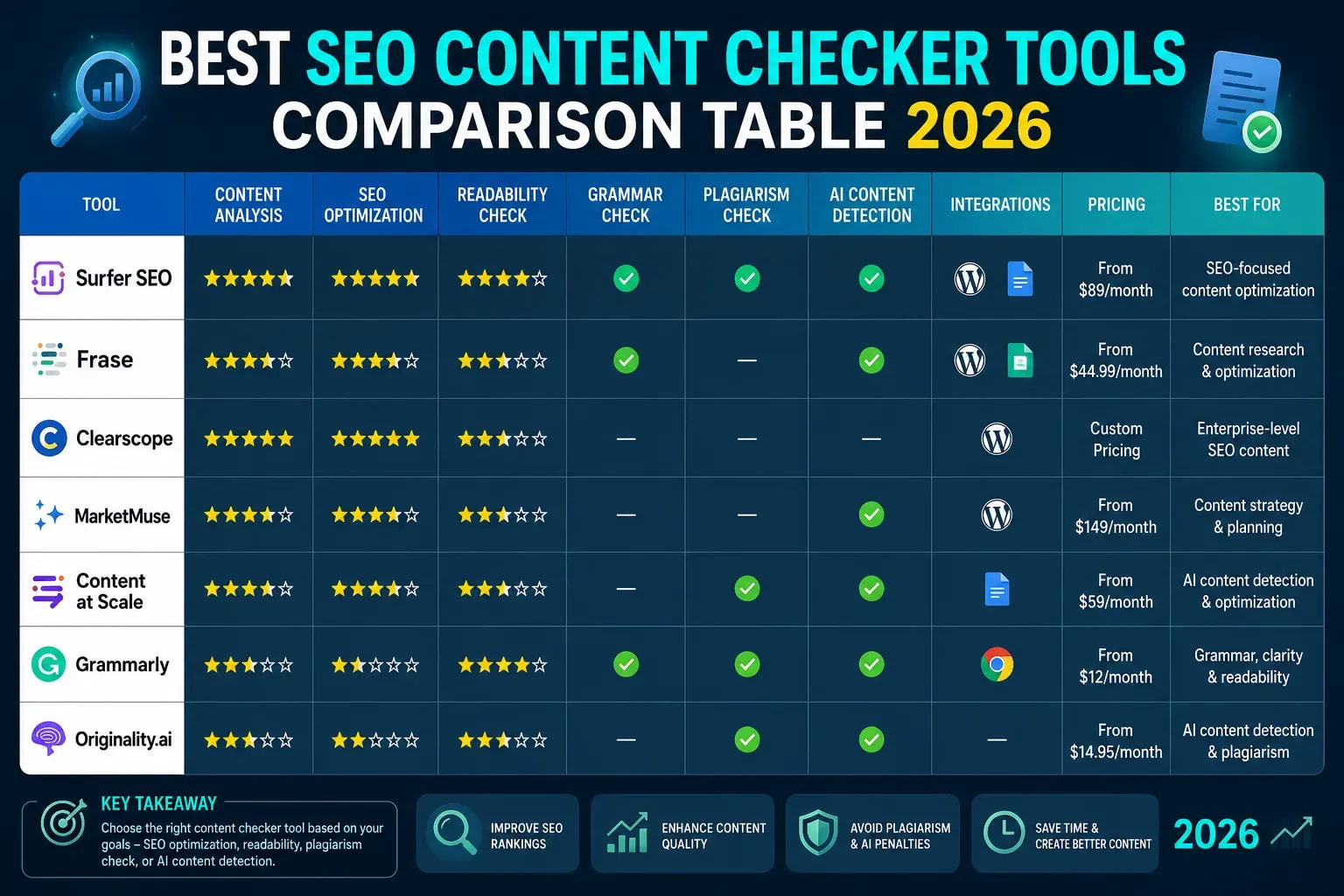
This narrow scope also keeps the page separate from Anobee's broader guide to SEO content checker tools. That guide surveys a larger category. This one answers a more specific purchase question: what do the roughly $20, $45 and $99 budgets buy from dedicated AI SEO content platforms?
Best AI SEO tools at a glance
| Tool and plan | Advertised price | Useful public limits | Best documented fit |
|---|---|---|---|
| NEURONwriter Bronze | $23 monthly or $19/month billed annually | 2 projects, 25 content analyses, 15,000 AI credits | Solo creators testing a low-cost content optimizer |
| NEURONwriter Silver | $45 monthly or $37/month billed annually | 5 projects, 50 content analyses, 30,000 AI credits | Freelancers managing several client or site folders |
| Frase Starter | $49 monthly or $39/month billed annually | 1 seat, 1 site, 10 articles and 50 audit pages monthly | Solo operators wanting research, creation, audits and publishing |
| Surfer Discovery | $49/month billed annually | 120 documents and 10 tracked pages | Writers who want Surfer's editor without the Standard tier |
| Content Harmony Standard 5 | $50 monthly or about $42/month billed annually | 5 content workflows, unlimited users and projects | Teams producing a small number of structured briefs |
| Surfer Standard | $99/month billed annually | 360 documents and 25 tracked AI prompts with weekly refresh | Higher-volume content teams adding AI visibility |
| Content Harmony Standard 12 | $99 monthly or about $89/month billed annually | 12 content workflows, unlimited users and projects | Teams building roughly weekly briefs |
| Clearscope Essentials | $129 monthly | 50 tracked prompts, 50 pages, 20 topic explorations and 20 drafts | Editorial teams that benefit from unlimited users |
NEURONwriter publishes its monthly and annual plan limits together [2]. Frase shows both billing options and includes the monthly content and audit caps on its plan page [3]. Surfer's displayed Discovery and Standard prices use annual billing [4]. Content Harmony and Clearscope publish different usage units, so their allowances are not directly interchangeable with “articles” or “documents” [5][6].
The table is a shortlist, not a universal ranking. Content Harmony's workflow credit and Surfer's document allowance represent different amounts of work. Count the deliverables you ship, not the largest number in a pricing grid.

What counts as an AI SEO tool here?
This guide compares software built around content research, briefing, drafting, optimization or ongoing content visibility. It does not attempt to replace a complete keyword database, backlink index, technical crawler, rank tracker or analytics platform.
Before paying, identify the job:
- Research and briefing: Collect competing headings, questions, topics, entities and search intent before writing.
- Draft optimization: Review an existing article against a tool's SERP-derived recommendations.
- AI-assisted production: Generate or revise outlines, sections and drafts inside the workflow.
- Team operations: Share briefs, assign work, maintain templates and manage approvals.
- AI visibility: Track prompts, mentions or citations across supported answer systems.
One product may touch all five jobs, but its cheapest plan may not include each at a useful volume. Pricing pages also use different units: documents, articles, workflows, pages, credits and prompts. Translate each unit into your monthly production plan before comparing prices.

Around $20: NEURONwriter Bronze
NEURONwriter Bronze is $23 per month or $19 per month when billed yearly. The plan includes two projects or folders, 25 content-writer analyses, five standard AI-monitored questions, 15,000 AI credits, a content plan and read-only content sharing [2].
That mix suits a solo creator or freelancer with one or two active sites. Twenty-five analyses are enough for weekly publishing plus several refreshes if one analysis maps cleanly to one working document. The two-project limit matters more if you serve several clients.
Bronze is not simply a cheaper version of every feature on the higher plans. NEURONwriter reserves advanced and custom AI templates, its one-click Content Designer, editable team sharing, plagiarism checks, WordPress and Search Console integrations, and API access for Gold and above [2].
Choose Bronze when the editor and recommendations are the product you need. Skip it when publishing integrations, collaborative editing or automation are central to the buying decision.
Around $45 to $50: four different purchases
The middle tier is where a feature checklist becomes misleading. Four products land near the same price but sell different workflows.
NEURONwriter Silver: more reports, not a new workflow
Silver costs $45 monthly or $37 per month with annual billing. It raises the allowance to five projects, 50 content analyses, seven standard AI-monitored questions and 30,000 AI credits [2].
Silver is the practical upgrade when Bronze already fits and the only constraint is volume. The same caveat remains: the collaboration, integrations, plagiarism checks and API features listed on the pricing page begin at Gold.
Frase Starter: the broadest solo workflow
Frase Starter costs $49 month to month or $39 per month when billed annually. It includes one seat and one site, with 10 articles and 50 audit pages each month. The plan also lists SEO and GEO scores, publishing to WordPress, Webflow, Sanity or Wix, Content Guard monitoring for 10 pages, and AI Visibility across ChatGPT and Google AI [3].
The plan is a stronger fit than a standalone editor when one person wants research, drafting, optimization, auditing and publishing in the same system. Its 10-article cap is the tradeoff. A solo publisher producing four substantial articles may have ample room; a content service delivering several pieces per client may not.
Frase offers a seven-day trial without a credit card. Use it to test the workflow and limits, not to judge whether a new article ranks. Search performance takes longer than a trial window, and Frase's own pricing page does not promise a ranking or citation during that period [3].
Surfer Discovery: access to Surfer's editor at the lower tier
Surfer Discovery is listed at $49 per month with annual billing. The public plan shows 120 create-or-optimize documents, 10 tracked pages, AI SEO optimization guidelines, and Surfy, its AI assistant and humanizer [4].
The allowance is much larger than Frase's 10 articles, but the unit is not necessarily equivalent. Surfer counts documents inside its product; Frase describes completed article capacity within a wider system. Test the operations you repeat most often rather than comparing 120 with 10 as if they measure identical work.
Discovery works for someone who specifically wants Surfer's editing environment and can accept annual billing. Buyers who need the Standard plan's wider AI-visibility and collaboration features should compare the full annual cost, not anchor on the entry price.
Content Harmony Standard 5: brief-led teamwork
Content Harmony charges $50 monthly for five Content Workflows, or about $42 per month with annual billing. Its plans include unlimited projects, unlimited users, rollover credits and team training [5].
A Content Workflow combines keyword analysis, a content brief and grading rather than selling a large pool of AI drafts. That makes the plan easier to justify for a small editorial team producing five important briefs per month. It is harder to justify for a solo writer who mainly wants an AI drafting assistant.
The trial is also different: Content Harmony offers the first 10 workflows for $10 rather than a conventional free trial [5]. That paid test can still be useful because it gives the team enough credits to compare several real assignments.
Around $99: choose volume or process
At roughly $99, the choice among the best AI SEO tools is less about “better AI” and more about what your team wants to standardize.
Surfer Standard: optimization volume plus AI visibility
Surfer Standard is displayed at $99 per month with annual billing. The current plan comparison lists 360 documents, 25 AI prompts refreshed weekly, ChatGPT tracking, brand knowledge, WordPress and Google Docs integrations, collaboration and rank-drop detection [4].
This tier makes sense when several people create and refresh content regularly and will use both the editor and monitoring. It is poor value when a team publishes only two articles a month, already pays for another visibility tracker, or will ignore the higher allowance.
Surfer offers new accounts a seven-day trial of its Pro plan. Because the trial tier is above Standard, check which features remain after downgrading before building a process around them [4].
Content Harmony Standard 12: repeatable briefs for a team
Content Harmony's Standard 12 plan costs $99 monthly or about $89 per month with annual billing. It provides 12 Content Workflows per month with unlimited users and projects [5].
Choose it when the expensive part of production is getting strategists, writers and editors aligned on a consistent brief. Twelve workflows can support roughly weekly publishing across several projects. It is not the obvious choice when the main need is bulk AI drafting or prompt tracking.
NEURONwriter Diamond: many projects at an annual $97 rate
NEURONwriter Diamond is $117 monthly or $97 per month with annual billing. It includes 50 projects, 150 content analyses, 20 standard AI-monitored questions and 75,000 AI credits. The plan also lists unlimited team sharing, integrations, plagiarism checks, content management, use of an owner's OpenAI key and API access [2].
Diamond offers the most project and analysis capacity in this price band on paper. Whether that is useful depends on the editor's fit, data quality and team adoption, questions a pricing page cannot answer.
Above $99: when Clearscope becomes reasonable
Clearscope Essentials starts at $129 per month. It includes 50 tracked prompts, 50 pages, 20 monthly Topic Explorations and 20 monthly Drafts. Every plan includes unlimited users and projects, along with sharing and export features [6].
Unlimited seats change the economics. A $129 tool used by six editors can cost less per person than a cheaper plan that charges for extra seats. The plan is harder to defend for one freelancer who needs only a handful of reports.
Clearscope advertises a 14-day free trial [6]. Use it to evaluate recommendation quality, brief usefulness, editing friction and how writers respond to the grading system. Do not treat a trial content grade as evidence that Google will rank the page.
Surfer vs Frase vs NEURONwriter
These three products are often grouped among the best AI SEO tools. They overlap in content research, AI assistance and optimization, but their entry plans point to different buyers.
| Decision factor | NEURONwriter | Frase | Surfer |
|---|---|---|---|
| Lowest documented entry | $23 monthly or $19 annual | $49 monthly or $39 annual | $49 annual-billing rate |
| Entry-plan emphasis | Affordable content analysis | Research-to-publishing system | High-volume editing and optimization |
| Entry-plan constraint to watch | Two projects; advanced features start higher | Ten articles, one site and one seat | Annual commitment at the displayed Discovery rate |
| Stronger upgrade reason | More projects, team tools and integrations | More sites, seats, audits and content capacity | Collaboration, prompt tracking and AI visibility |
| Best fit based on public plan design | Cost-conscious solo optimizer | Solo operator managing the full content loop | Team with frequent optimization work |

Is Frase better than Surfer?
Frase fits better when one person wants to research, draft, audit and publish up to 10 articles a month from one system. Its Starter plan keeps those stages together.
Surfer fits better when the content editor is the centre of the workflow and the team expects to create or optimize far more documents. Standard adds monitoring and collaboration features for ongoing operations.
Neither conclusion proves that one product's recommendations are more accurate. That requires a controlled test on the same query, location, competitors and draft.
Is NEURONwriter a practical Surfer alternative?
Yes, when “alternative” means a lower-cost content analysis and optimization workflow. Bronze and Silver provide more affordable entry points, while Gold introduces the integrations and team features that make the comparison closer.
No, if the required workflow depends on a specific Surfer feature, team process or monitoring setup. A lower price does not replace a capability you will use every week.
For keyword discovery before the brief, pair the chosen editor with a suitable tool from Anobee's guide to keyword research tools for freelancers. Content optimization starts after you have selected a query worth pursuing.
What pricing pages cannot tell you
Official documentation is the right source for prices and advertised limits. It is weak evidence for questions such as:
- How useful are the suggested terms for your niche?
- Does the tool identify search intent correctly?
- How often does its outline repeat what already ranks?
- How much editing does an AI draft need?
- Does the score encourage awkward term repetition?
- How quickly can a writer learn the interface?
- Does support resolve a real billing or data problem?
Vendor testimonials cannot replace your own workflow test. A recommendation can be perfectly accurate for one publishing model and wasteful for another.
A fair trial method for AI content optimization tools
Use one brief and one draft across every trial. Changing the keyword, country, language or source text makes the result difficult to compare.

1. Define the job before opening a tool
Choose one query you genuinely plan to publish or refresh. Record the target audience, country, search intent, page type and the action a reader should take.
2. Keep the input identical
Give each platform the same primary query, working title, draft and required source list. Select the same search location and language when the product allows it.
3. Review the research and brief
Record which competitors the tool selected. Check whether the suggested headings answer the reader's task or simply copy common SERP patterns. Note useful missing entities and obvious irrelevant terms.
4. Optimize a copy of the same draft
Do not rewrite the article independently inside each tool. Apply only suggestions that improve completeness or clarity, and record any recommendation you reject because it would make the prose repetitive or inaccurate.
5. Measure the working cost
Track setup time, research time, editing time and export time. Confirm which action consumes a document, article, workflow, page or credit. A low subscription price can become expensive when a confusing process adds an hour to every article.
6. Check the handoff
Export or publish to the CMS you actually use. Test comments, permissions and templates with the people who will touch the document. A strong personal editor can still fail as a team system.
7. Separate tool performance from search performance
At the end of the trial, you can judge research quality, workflow speed and ease of use. You cannot responsibly attribute rankings or AI citations to the product after seven or fourteen days.
Google recommends evaluating third-party advice against official Search guidance. It also states that these tools do not possess Google's internal ranking data [1]. Treat their recommendations as inputs to editorial judgement, not instructions to apply automatically.
Calculate the cost per useful article
The displayed monthly price is only the starting point. Use:
<code class="language-plaintext">cost per useful article = total monthly tool cost / articles actually published or substantively refreshed</code>
A $99 subscription used for 10 published articles costs $9.90 per article before labour. A $23 subscription used for four articles costs $5.75 each. If half the drafts never publish, calculate with the published number, not the allowance.
Add the costs the price table hides:
- extra seats or sites
- AI-generation or overage credits
- a separate keyword, crawler or rank-tracking subscription
- time spent cleaning AI output
- time spent chasing a score that does not improve the page
- annual prepayment and cancellation terms
The cheapest plan is the one that removes a real bottleneck at a cost your publishing output can support.
Which AI SEO tool should you choose?
Choose NEURONwriter when:
- $20 to $45 is the practical monthly limit.
- You mainly need content analysis and optimization.
- Two to five projects cover the work.
- You can test higher-tier integrations before committing.
Choose Frase when:
- One person wants research, drafting, audits and publishing together.
- Ten new articles a month is enough.
- Direct CMS publishing removes meaningful manual work.
- The $49 monthly option is preferable to an annual commitment.
Choose Surfer when:
- The team optimizes content frequently.
- A larger document allowance will actually be used.
- Google Docs, WordPress, collaboration or AI visibility belongs in the workflow.
- The annual price is justified by measured monthly output.
Choose Content Harmony when:
- The content brief is the central handoff between strategy and writing.
- Unlimited users and projects matter.
- The team publishes five to twelve substantial pieces a month.
- AI drafting is less important than a consistent research and review process.
Choose Clearscope when:
- Several editors need seats.
- Twenty monthly topic explorations and drafts fit the production plan.
- A $129 shared editorial system is affordable.
- The 14-day trial proves the recommendations fit the team's standards.
If the primary need is prose generation rather than SERP research and optimization, start with Anobee's comparison of AI writing tools for bloggers instead.
Common buying mistakes
Treating a content score as a ranking score
Every platform builds its own model from the data it collects. The number helps you navigate that model; it does not reveal Google's internal evaluation of the page.
Choosing the annual plan before testing a workflow
Annual billing improves the displayed monthly rate but increases the cost of a poor choice. Use the trial or a monthly plan first unless the product offers a clear refund path.
Paying for AI drafts you will not publish
Generation limits look valuable until every draft requires extensive correction. Test one article from research to final CMS handoff, not only the first generated screen.
Buying overlapping tools
A keyword platform, content editor, AI writer and visibility tracker may repeat several features. Map the stack before adding another subscription, then cancel the tool whose job is already covered.
Optimizing every suggestion
A missing term can expose a real content gap. It can also be irrelevant to your angle. Apply a recommendation only when it helps the intended reader understand or complete the task.
The bottom line
The best AI SEO tools for a small budget still need to earn their cost. Start with NEURONwriter Bronze and verify whether the editor saves enough time to justify even $23. Frase Starter is the better all-in-one option for a solo operator who values audits and CMS publishing. Surfer Standard becomes reasonable when higher document volume, collaboration and AI visibility are part of a repeatable team process.
Content Harmony and Clearscope solve different problems. Content Harmony standardizes briefs across unlimited users; Clearscope offers a shared editorial optimization system at a higher entry cost.
No pricing table can settle the final choice. Run the same real assignment through the relevant trials, keep the input fixed and measure the useful output. Buy the workflow that reduces an observed cost, not the product with the longest feature list.
Frequently Asked Questions
What is the best AI SEO tool for a small budget?
NeuronWriter Bronze is the lowest-priced dedicated content optimizer in this comparison at $23 monthly or $19 per month when billed annually. Its limits suit a solo operator testing a modest publishing workflow.
Is Frase better than Surfer SEO?
Frase is the better fit when a solo operator wants research, drafting, audits and CMS publishing in one lower-cost plan. Surfer is more compelling when document volume, content optimization and AI-visibility monitoring justify the higher tier.
What is the cheapest Surfer SEO alternative?
NeuronWriter Bronze is a lower-cost alternative for SERP-based content analysis and optimization. Frase Starter costs more but covers a broader research-to-publishing workflow.
Do AI SEO content scores improve Google rankings?
A content score can reveal topics or terms worth reviewing, but it is not Google ranking data. Google says third-party tools do not have access to its internal ranking systems and cannot guarantee performance.
Should I pay monthly or annually for an AI SEO tool?
Start with a trial or one monthly cycle when possible. Annual billing can reduce the displayed monthly cost, but the saving is poor value if the tool does not fit your workflow or you use only a small share of its allowance.
Sources and References

Written by
Bibek Thapa
AI-Powered Digital Growth Strategist
Bibek Thapa works across AI workflows, SEO, AI search optimization, content strategy, website growth, and productivity systems. Anobee documents practical lessons, tools, experiments, and systems for improving digital presence.
- AI workflows
- Digital growth
- SEO
- GEO
- AEO
- Content strategy
- Website growth