

Zero-click search means a user gets an answer right on the results page and never visits a website. In 2026, about 68% of Google searches end this way. When an AI Overview shows up, that number jumps to roughly 83%. Chasing clicks that structurally aren’t coming anymore is a losing game. The better move is to become the source AI answers cite, then measure value through impressions, brand lift, and citations instead of traffic alone.
I’ve watched this zero-click search strategy shift play out in real time across the GEO cluster on anobee.com in 2026, and it’s forced a change in how I think about “did this article work.” Clicks used to be the whole story. They’re not anymore, and pretending otherwise just means you’re flying blind on half your content’s actual performance.
Key Takeaways
- About 68% of US Google searches ended without a click in early 2026, up from roughly 60% in 2024 (SparkToro/Similarweb).
- When an AI Overview appears, click-through drops to around 8%, versus 15% without one (Pew Research).
- Brands cited inside AI Overviews earn 35% more organic clicks and 91% more paid clicks than uncited brands on the same query (Seer Interactive).
- Only about 1% of AI Overview viewers click a cited source link at all (Pew Research).
- Mobile zero-click behavior, around 77%, runs far ahead of desktop, around 46.5%.
- Impressions and branded search lift, not clicks, are the metrics that actually tell you what’s working now.
What Does Zero-Click Search Mean in 2026?
A zero-click search resolves entirely on the results page. Someone types a question, Google (or ChatGPT, or Perplexity) hands back an answer through an AI Overview, a featured snippet, or a knowledge panel, and the person moves on. No visit, no click, no line in your analytics.
Ten years ago this described something like 45% of Google searches. That was already a lot. SparkToro’s most recent clickstream analysis, built on Similarweb panel data from January through April 2026, put the current figure at 68.01%, up from 60.45% just two years before. That’s the fastest jump this trend has seen in a decade, and it tracks almost exactly with how fast AI Overviews have rolled out.
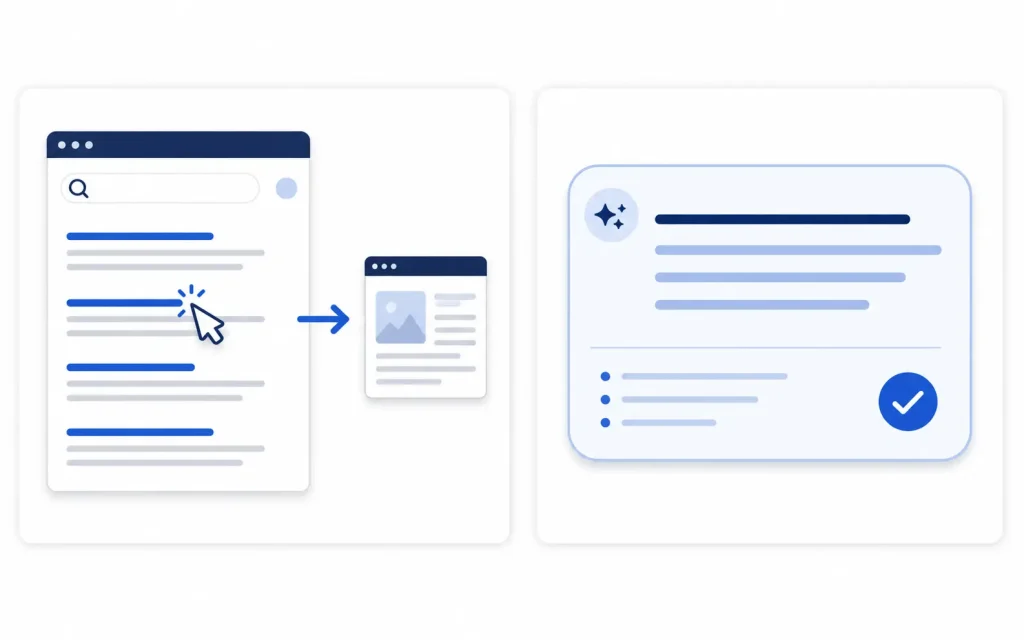
AI Overviews now show up on more than 20% of all Google queries. When one appears, behavior shifts hard, a pattern Google’s own AI Optimization Guide acknowledges directly rather than treating AEO and GEO as separate disciplines from standard SEO, a distinction covered in more depth in AEO vs SEO vs GEO. Pew Research found people click through to a traditional result about 8% of the time with an AI Overview present, compared to 15% without one. That’s close to half the click probability, on exactly the queries where AI Overviews are expanding fastest.
One honest caveat: these figures are US-market averages. If you’re searching in Nepali, or from a region where AI Overviews are still rolling out query-type coverage, you’ll see far fewer AI-generated answers than a US or UK searcher typing the same question in English, even though the feature is technically live in your country. That gap is closing, but it’s real right now, and it’s worth knowing before you assume the 68% figure describes your own search results.
Key Insight: Zero-click isn’t some side effect of AI Overviews that will fade once the novelty wears off. It’s been building since featured snippets and knowledge panels matured around 2014. AI just poured gasoline on it.
None of this is unique to Google, either. Ask a question in ChatGPT or Perplexity and there’s often no “results page” at all in the traditional sense, just an answer with maybe a citation link nobody clicks. The zero-click behavior that started on Google’s SERP has become the default shape of AI search everywhere.
How Did We Get to 68%?
It’s tempting to blame AI Overviews for all of this. They’re not the whole story, just the steepest part of a curve that’s been climbing for over a decade.
Rand Fishkin and SparkToro first put a number on zero-click behavior back in 2019, landing around 50%. Google had already been rolling out featured snippets since 2014 and Knowledge Panels a couple of years before that, both designed to answer a question right on the results page. By 2021, Datos clickstream data showed the rate had climbed past 64%. Mobile searches pushed the number up faster than desktop the whole way through, since phone screens reward a quick on-page answer far more than a list of ten blue links.
Then AI Overviews scaled in 2024 and 2025, and the slow decade-long climb turned into a sharp jump. SparkToro’s most recent read, 68.01% in the first four months of 2026, represents the fastest year-over-year acceleration this metric has ever shown. Desktop zero-click sits around 46.5%. Mobile sits around 77%. That gap alone tells you something: if most of your readers are on phones, and for a niche like ours across Nepal, the UK, Canada, Australia, and India, mobile traffic dominates, you’re already living well past that 68% average.
Key Insight: Zero-click search didn’t arrive with AI Overviews. It’s a ten-year trend that AI Overviews accelerated sharply, which means the strategies that worked against featured snippets in 2019 are a reasonable starting point for what works against AI Overviews now.
Why Clicks Are the Wrong Metric Now
Most content strategies still boil success down to one number: organic clicks. That number is quietly lying to you. If you want the fuller picture of why click counts alone no longer reflect content performance, see how to prove content ROI without click data. A page can rank well, get pulled into an AI Overview, shape a reader’s decision, and still show flat click data in Search Console.
Seer Interactive’s November 2025 analysis found something worth sitting with: brands cited inside an AI Overview earn 35% more organic clicks and 91% more paid clicks than brands that aren’t cited, on the exact same query. That gap only shows up if you’re actually tracking citation presence instead of just clicks. Pew Research’s separate finding, that only about 1% of AI Overview viewers click through to any cited source, sharpens the point further. Most of the value from being cited happens before any click, inside the reader’s head, not after it.
A quick check on my own numbers first: when I pulled Search Console for anobee.com in July 2026, the site-wide average position sat at 59.9 over the trailing three months, with a 0.8% click-through rate on 5.16K impressions. That is not a zero-click story yet. At page six of the results, low clicks are mostly explained by weak ranking, not by AI Overviews absorbing them. The honest lesson here is a step earlier than the one this article is about: build ranking authority first, since zero-click value capture matters most for pages that are already ranking well enough to be summarized in the first place.
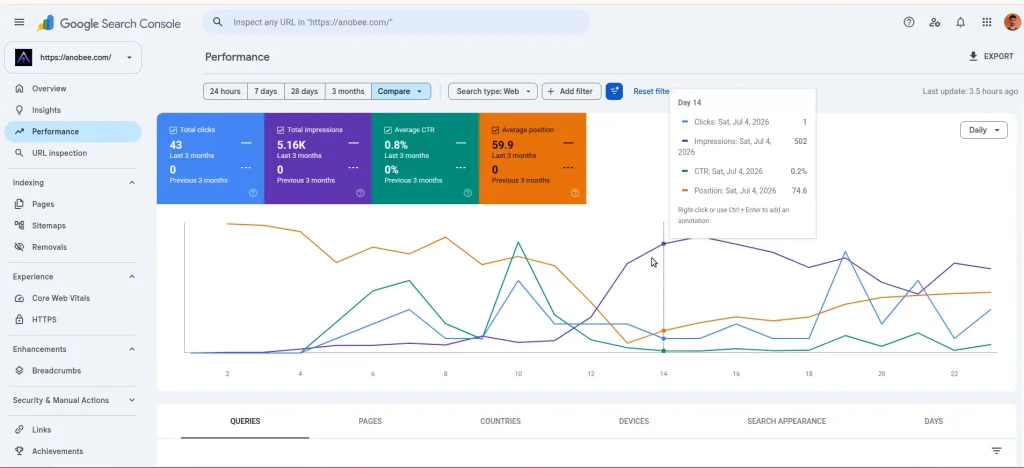
Key Insight: Zero-click strategy is the second problem, not the first. If your pages aren’t ranking yet, fix that before worrying about whether AI Overviews are eating your clicks, since a page at position 60 was never going to get clicks either way.
Building a Zero-Click Search Strategy for 2026: The ANCHOR Framework
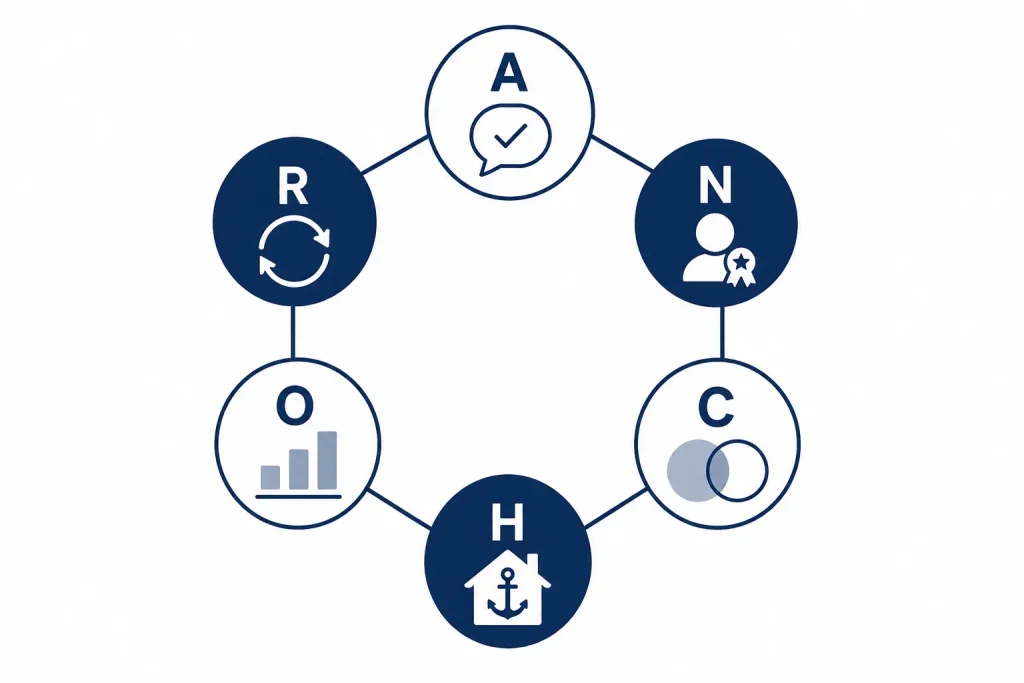
Fighting a structural shift by optimizing harder for clicks that aren’t coming back doesn’t work. What does work is a framework built around what actually earns citation and recall. I call it ANCHOR: Answer-first structure, Named authorship, Corroborated claims, Homepage-level entity consistency, Original data, and Repeat brand exposure.
A — Answer-First Structure
Open every major section with a direct, self-contained answer to the question in the heading, in the first sentence or two. Retrieval systems lift these passages straight into their answers. Bury the answer three paragraphs down and a competitor’s cleaner passage gets quoted instead, even if your content is deeper overall.
N — Named Authorship
A bylined article from a named, verifiable author carries meaningfully higher citation odds than anonymous content, according to Zyppy’s 2025 research on ChatGPT citation patterns. Every anobee.com post already carries a named byline linked to an author bio. Pair that with the specific tactics that earn ChatGPT citation and named authorship stops being a passive checkbox. That’s a real advantage already in place, so the job is just keeping it consistent on every new piece rather than building it from scratch.
C — Corroborated Claims
AI systems weigh consensus over confidence. When the same fact about your brand, your data, or your claims shows up independently across your own site, third-party mentions, and community discussion, models treat it as more reliable and surface it more readily. This is the same principle behind entity optimization for AI search, building a consistent identity graph instead of isolated pages.
H — Homepage-Level Entity Consistency
Your brand name, author name, and core facts need to match exactly across your site, your About page, your social profiles, and any third-party listings. Right now, anobee.com’s Organization schema still points its url field at an old domain. That’s a direct entity-consistency failure, and it works against everything else in this framework until it’s fixed. See fixing your Organization schema for AI trust for the exact steps, and cross-check the field against RankMath’s schema documentation. Worth doing before pushing harder on any citation-focused content.
O — Original Data
Primary data, your own benchmark, survey, or observed result, gets cited far more often than commentary that just repeats someone else’s numbers. Something as simple as a before-and-after Search Console comparison, published with real figures, counts as original data. It doesn’t need to be a formal study.
R — Repeat Brand Exposure
Zero-click value builds up over time rather than landing in one shot. A reader who sees your brand named inside three different AI answers over a month is a lot more likely to search your name directly later. That branded-search lift is one of the clearest measurable proxies for zero-click influence you actually have access to.
Key Insight: ANCHOR treats citation, not clicks, as the primary unit of content success, then works backward to the tactics that earn it.
What CTAs Actually Work in a Zero-Click World?
Generic “click here” or “read more” CTAs assume the click is coming. Any zero-click search strategy has to account for this: when most searches never convert into a visit, a CTA’s job shifts from driving an immediate click to building recall for the next search someone does.
Three CTA types hold up better than generic ones in a zero-click context:
- Brand-recall CTAs. “Search anobee for [specific term]” sticks in memory and gives the reader something to re-search later, which “click here to learn more” never does.
- Named-resource CTAs. Pointing to a specific, distinctly-named tool or template, like “the ANCHOR framework checklist”, gives the reader something concrete to look for even if they don’t click right now.
- Community CTAs placed early. A genuine, specific invitation to discuss the topic on a relevant forum thread, placed in the first 200 words instead of buried at the bottom, actually gets seen. Nobody reaches a closing pitch on a page they didn’t click into.
Key Insight: In a zero-click environment, a CTA’s job is to be remembered, not just clicked.
Worth watching: threads on Reddit’s r/SEO and r/bigseo discussing zero-click strategy keep circling back to one question, “how do I even know if this is working?” That question is the direct bridge into measurement, which is where most of these conversations actually stall out.
One thing I’d push back on: don’t swing so far toward brand-recall CTAs that you strip out every functional link. Readers who do click, and some still will, need a clear next step. The shift isn’t “remove CTAs,” it’s “stop designing every CTA as if the click is guaranteed.” A post can carry both a memorable brand-search prompt near the top and a normal, functional link further down for the smaller share of readers who are ready to act right now.
How to Measure Success Without Clicks
Clicks alone will keep understating real performance as this trend continues. Four measurements close the gap, and all four sit inside tools you likely already have running.
- Impressions in Google Search Console. Track impression growth on informational queries separately from click growth. A widening gap between the two is the zero-click signature. It usually means your content is being seen and summarized, not ignored. Google shipped a dedicated Generative AI Performance report inside Search Console in June 2026 that isolates AI Overview and AI Mode impressions from the rest, though as of this writing it’s rolled out to a subset of UK site owners only. If you’re outside the UK, the regular Performance report still carries the same underlying data, just not broken out separately yet.
- Branded search volume, also in GSC. Filter Performance data by your brand name. Rising branded search after publishing zero-click-prone content is a strong proxy for AI-driven recall, since Pew’s 1% click-through figure means most of the influence never shows up as a direct click.
- GA4 direct and branded-referral sessions. A rise in direct-entry traffic or branded organic sessions, without a matching rise in standard organic referral, often reflects the “dark funnel” effect: someone saw your brand in an AI answer, then came back later through a different path entirely. Pairing GA4 with a behavior tool like the one covered in Microsoft Clarity Guide helps confirm those direct visitors are engaging, not bouncing.
- Manual AI platform spot-checks. Query ChatGPT, Perplexity, and Claude directly for your target questions on a monthly cadence and note whether your site shows up. There’s no reliable free tool that automates this across all three platforms yet, so a manual check remains the most accurate method for a single-author site. Perplexity’s freshness-weighted ranking behavior makes it worth checking that platform on its own, separate from ChatGPT and Claude.
Here’s how the four pieces fit together in practice. Say a GEO-category post shows 4,000 impressions and 90 clicks in a given month, a 2.25% click-through rate that looks weak in isolation. Pull up branded search volume for the same period. If searches for your brand name climbed alongside that low-CTR post’s publish date, and direct GA4 sessions ticked up too, the post is probably doing real work in AI answers even though the raw CTR number looks unimpressive on its own. Judged by clicks alone, that post looks like a failure. Judged by the full picture, it might be your best-performing piece.
Key Insight: Impressions, branded search lift, and direct traffic together tell a far more honest performance story than clicks alone in 2026’s search environment.
What percentage of searches are zero-click?
About 68% of US Google searches ended without a click in early 2026, according to SparkToro’s analysis of Similarweb clickstream data, up from roughly 60% in 2024. The rate climbs to around 83% when an AI Overview appears on the results page.
How do AI Overviews affect traffic?
AI Overviews cut click-through roughly in half. Pew Research found users click a traditional result about 8% of the time when an AI Overview is present, compared with 15% when it isn’t, since the summary often satisfies the query on the spot.
What is zero-click value capture?
Zero-click value capture means earning visibility, trust, and brand recall when your content gets cited or summarized inside an AI answer, even though the user never visits your site directly. It’s the core goal of any zero-click search strategy: the value shifts from a click to a mention.
How do you get brand mentions from AI answers?
Publish clear, sourced claims under a named author, keep facts about your brand consistent across your site and any third-party mentions, and structure content so an AI system can lift a clean, self-contained answer straight from it.
What CTAs work for zero-click searches?
Brand-recall CTAs that stick in memory outperform generic “click here” prompts, since the click may never happen. Naming a specific free tool, a branded search phrase, or a distinct resource works better than a vague call to action.
Bottom Line
Sixty-eight percent of searches now end without a click, and that number keeps climbing as this zero-click search strategy shift continues into 2026. Optimizing harder for clicks that structurally aren’t arriving is a losing strategy. The ANCHOR framework, answer-first structure, named authorship, corroborated claims, entity consistency, original data, repeat brand exposure, gives you a concrete way to earn the citation itself, which is where the real value sits now.
Fix the entity-consistency gaps first; they undercut everything else you do. Then measure impressions and branded search lift alongside clicks, not instead of them, to see what’s actually working. If it’s been a while since you looked at your older posts through this lens, the Content Audit Guide is a reasonable next stop. None of this means clicks stop mattering. It means they stop being the only number that tells you whether an article did its job.